Podcast published: December 12, 2025
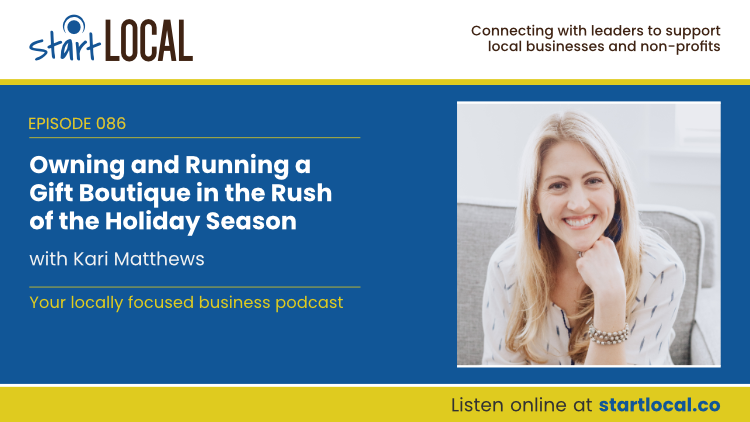
As we embrace the hustle-bustle of the holiday season, local retail shop owners are rushing to make the most of their busiest time of the year. We were lucky to connect with Kari Matthews, owner of Clean Slate Goods in Kennett Square. Kari unfolds how she built a purpose-driven retail boutique that connects local shoppers with makers from around the world. Kari shares the story behind her storefront, the values guiding her sourcing decisions, and why investing in artisans and ethical production matters deeply to her. We also talk about the in-person experience she creates for customers, the community partnerships that shape her business, and the impact of choosing gifts that truly change lives.
Links
Clean Slate Goods
- Website: cleanslategoods.com
- Instagram: instagram.com/cleanslategoods
- Facebook: facebook.com/cleanslategoods
Local Nonprofits
- Kennett Area Community Services
- Young Moms
- The Wardrobe
- Family Promise of Southern Chester County
- Kennett Collaborative
Additional Links
Related Episodes
Intro: Welcome to Start Local where we talk with business owners, leaders of nonprofits, and other members of our community focused on doing business in and around Chester County, PA. Each episode will provide insight into the local business scene and tell you about opportunities to connect with and support businesses and nonprofits in your local area.
The Southern Chester County Chamber of Commerce promotes trade, commerce, industry and sustainable economic development while supporting a diverse and growing marketplace. The Chamber is proud to partner with the Start Local podcast to raise the profile of businesses and nonprofits throughout Chester County. Learn more about the chamber at scccc. That’s scccc.com.
Liam Dempsey: Hey. Hey. Welcome to the Start Local podcast. I’m Liam Dempsey and we are keeping warm in the podcast studio. It is cold outside today and I am delighted as always to be here with Erik Gudmundson.. Erik, how are you friend?
Erik Gudmundson: I’m doing well. There’s not too much smoke in the podcast studio. It’s just all this hot air. So here we go.
Liam Dempsey: Folks. I think it’s all downhill from here from a punning standpoint, but we’re going to try to have funning anyway.
So, as we record today’s conversation, we are absolutely in the throes of the holiday season and as such we are focused on shopping local and more specifically with this up within this episode is local retail. So, today we are delighted to welcome Kari Matthews. She’s the owner of Clean Slate Goods. Clean Slate Goods. It’s a really unique gift shop on State Street in Kennett Square, PA. We’re really grateful to Kari for sharing her time today with our community. It is hugely busy for her so that she’s is a real bonus for us. Kari, thank you and welcome.
Kari Matthews: Hey Liam. Hi Erik. Happy to be here.
Erik Gudmundson: Kari, it’s nice to meet you and thanks so much for making time for us. I’m looking forward to this conversation.
Kari Matthews: Definitely.
Liam Dempsey: Kari, we shared that you’re the owner of Clean Slate Goods. That’s a wonderful retail shop right there at the almost at the corner of State and Union on Kennett. Just a little bit down on street. Walk us around your store, tell us what you sell. It’s really quite unique.
Kari Matthews: Yeah, come on in the shop. We have been in the Kennett borough for about seven years now and we just love being part of the local business, but as you step into our store, we are a gift boutique. So you’re going to find gifts from young to old, jewelry and handbags. You’ll find greeting cards and kids toys. We have a little bit of something for everyone but everything is crafted with intention by makers here in the USA as well as makers around the globe.
Erik Gudmundson: Well, let’s spend some time exploring why you decided to open a brick and mortar store as opposed to doing everything online. Tell us about that decision, please.
Kari Matthews: Yeah, it had a lot to do with wanting customers to be able to come in the shop and see the products and read the stories and to really get a feel for the impact of their purchases. And the online world is a huge world and I just really wanted to create an in store experience for customers to come and learn about my products and the stories behind them.
Liam Dempsey: So let’s get into that a little bit then. So your store sells a lot of fair trade goods and your website positions your wares as, I’m going to hopefully quote this correct, Kari. Meaningful gifts that change lives. So tell us a little bit about fair trade goods. What are they and why are you selling fair trade goods? What does that mean to you? What’s that all about?
Kari Matthews: Sure. Well, I’ll start by defining fair trade for people who don’t know. And I’m a teacher by trade. So I’m going to take you back to the elementary lunchroom table when we were allowed to still make lunch trades. And just think about if you have your mom’s famous chocolate chip cookies and your friend is wanting to trade you their smushed PB&J sandwich, nobody’s going to think that’s a fair trade. Obviously you’re not going to want to trade that. So fair trade by definition is you are fairly trading a maker with a fair and reasonable living wage for the product that they are crafting. Fair trade also includes safe working environments, no child labor, and often includes medical benefits and other resources to help the maker.
So I decided to sell fair trade goods as well as goods made by social enterprises here in Pennsylvania because I’ve learned that there is so much good that can happen when people are given dignified jobs, specifically those in communities where there’s poverty. Perhaps they’ve previously been incarcerated or had addiction been part of human trafficking. And when people are given dignified jobs and really valued and shown worth, it not only changes their lives, but it also changes the lives of their family and their communities. So that is why I opened my store to share these goods with others.
Erik Gudmundson: As we record this, it’s currently the holiday season. We just passed Thanksgiving and that means Christmas, and the gift giving holidays at this moment are just a few weeks away.
And so we know that this period of time is very important for retailers. What levels of sales do you typically record during this period relative to the rest of the year.
Kari Matthews: Sure. So I was actually pretty surprised myself after my first couple years in retail. Actually, from mid November through December, we do 40% of our annual revenue. So in just six weeks of the year, we’re making 40% of our income for the year.
Erik Gudmundson: Wow, that’s a very compressed timeline for you and your staff.
Kari Matthews: It truly is. It’s a little bit of a wild ride, but always fun.
Liam Dempsey: Speaking of learning, when you and I were chatting before we hit the record button, you mentioned a few different times that you regularly engage with an online community for retail shop owners, for small shop owners, and that you had learned a lot of different business lessons that you had since implemented. Wow, that’s actually Right. That was helpful. Tell us about that online community and how it has helped you and maybe share a few examples of what you learned and how you implemented that, please.
Kari Matthews: Definitely. Yeah. I found online learning to be hugely beneficial. Like I said, my degree is in elementary education, so I do not have a big background in business. I just started this jumped in about seven and a half years ago. So learning from people who have been in the trade and have experience has been hugely impactful for me.
So, a couple online communities that I’ve found helpful. One of them is called the Boutique Hub. There’s another one called Whiz Bang Retail Training. So those are more large scale groups to be a part of that offer training from the basics to, you know, the nitty-gritty.
But I’ve also maybe even more helpful, have found other women shop owners with shops similar to mine. And I’ve been a part of several Mastermind groups. So these are small groups, maybe from 10. One was just one-on-one where monthly I’m getting together online, and we’re chatting together, sharing our struggles, brainstorming ideas. So that’s really helped with a lot of ideas from website to marketing, promotions. Yeah, just a lot of different ideas that I’ve gleaned from those local communities.
Liam Dempsey: And are those communities primarily local or are they shop owners and women shop owners all over the continental US, all over the world. Tell us about who you’re connecting with, particularly those masterminds. I find those really interesting.
Kari Matthews: Yeah. So those actually are all over the country that people jump into one just kind of randomly. It was a shoe brand that was an ethical shoe brand. So the woman leading that at one point lived in Hokessen, Delaware. She’s in North Carolina now. But that was a cool connection that she’s been in Kennett, been in my shop space before. It was my shop space.
Liam Dempsey: That’s really cool.
Kari Matthews: Yeah.
Erik Gudmundson: Well, your retail store in the heart of Kennett Square has a really welcoming, warm storefront. But as I was prepping for this interview, I realized you also sell online. What’s the balance between the two and how do you decide what to feature in the store versus what you’re featuring online?
Kari Matthews: So for starters, probably 95% of our business is in store. So that’s where my focus is going to be. I only have, I have a limited bandwidth as we all do, so I’m going to focus most of my time and energy there. And yet I feel, and I’ve learned that having that online shop is hugely important. Even our local customers will often look at the website before they come in. Sometimes coming in asking for a product we haven’t even displayed yet, but they found it online so they’re kind of doing preliminary shopping there. We offer local delivery in store pickup. So that again is a resource for our local customers.
I would say the online side, it’s a slow, steady growth. And I think if you have a shop like mine, definitely have that resource, have an online shop and just realize the longer you have it, the more traffic you’ll get. So we’ve seen traffic pick up. This last weekend is our most popular weekend as far as Cyber Monday sales. So we had lots of orders to ship out, but out of 20 orders those went to 14 different states, which is just amazing. So sometimes I’m very surprised how people find us, but they do and it’s a good thing.
Liam Dempsey: As someone who makes websites for a living, I’m very interested in this. So I want to ask a follow up question. When you opened your retail store, did you have a website right away and was it e-commerce or did you just open as a retail? And then at some point once you kind of cleared your head and got your space all organized and ready, you said, okay, now I’m going to sell online. Talk us about how you decided to get into e-commerce.
Kari Matthews: I did the website right away and when I say I, a friend of mine created it for me, but we did that right away. And I don’t know if it was just me being a rookie and thinking that was essential, but it has proved helpful. And along the way I’ve learned, I mean, I’ve kind of changed the platform and plugged in all the stuff myself since then, but I use Shopify and I think one of the it’s an e commerce and retail platform for sales. So one of the reasons I chose it was it worked with my online store and my brick and mortar.
Liam Dempsey: Yeah, thank you for that. I appreciate that. Shopify is very well known. Okay, so next question for you. And this might put you on the spot a little bit here, but we appreciate that small business owners have a lot of different roles to fill within the business. Everything from top to bottom has to at least be overseen if not done by that owner. So this is a two part question for you, Kari. What task do you like the most? And I’m going to guess it’s probably something around the products or the customers because you’re very passionate about both of those. But maybe the cynical part of me also wonders, what chore do you loathe the most?
Kari Matthews: Good question. Yes. So I think probably for most people opening a gift boutique, you dream about interacting with customers and buying the products, creating the displays and those are all my favorite parts. I don’t know if I could pick a top those. I enjoy all of those. It’s the back end stuff. It’s sitting in my storeroom slash office in the back of the shop doing the nitty gritty work, the business details, the reporting damaged product, the on the phone with customer service when Shopify isn’t working. Those nitty gritty details that you have to do to keep your business running, but they certainly aren’t glamorous. Those are the ones I loathe.
Liam Dempsey: So those back office tasks that you loathe, doing the dealing with the e-commerce store, returning products, looking at the numbers and all the kinds of things, sitting at the computer, probably a cramped office. If it’s a retail space because you want as much retail space as possible, how important are those as a retail shop owner to the success of your business? How important is it to get those done right?
Kari Matthews: I think it’s important. I mean you can’t ignore them because they will pile up and they will catch up with you. But it is true that you have to use wisdom and discernment to know what’s the weeds and what’s really important. And I’m a perfectionist and so I want things done right and I want it perfect. But yes. Does your email to your brand need to be worded just so or can you just send them a few sentences and be done with it? So it is a balancing act. I think that you learn.
I’ve also learned from my business trainings. You do what you do best and you outsource the rest. Financially, I’m not outsourcing everything I don’t like to do. But one thing I did about a year and a half ago was find an accountant that was specific to retail shops like mine. So that’s one thing I’ve been able to offload, which has been hugely helpful.
Erik Gudmundson: And related to that outsourcing note, finding the right people to employ so insourcing but to someone other than you is often one of the biggest challenges that business leaders face. What’s your process for hiring the right people?
Kari Matthews: Some of the best advice I’ve received regarding this is instead of putting up a we’re hiring sign in the window, you reach out to your VIP customers when you are ready to hire. And of course, you know, this is assuming you’ve been established for a bit. When you’re ready to hire, you send an email out to maybe your top 20 customers and let them know, hey, I have a position to cover. Does anybody know someone who would be a good fit? So, number one, there’s a possibility that one of those VIP customers wants to fill that role. And you already know them, you respect them. You know they’re connected with your shop and they’ll care about their job. Number two, if they do all those things, if they care about your shop, they’re going to send people your way that are going to be a good fit. So I have definitely found some good employees that way.
And I also believe in the power of prayer. So I pray specifically ask God to help send the right people. And he has done that time and time again. So I think it’s important that you’re not looking for someone who’s just looking for a paycheck. You’re looking for somebody who’s connected with the heart of your business. And when you have somebody like that, your business will be more successful.
Liam Dempsey: Let’s go back to fur trade for a moment here. You’ve previously shared that you carry products from all over the United States and, in fact, around the world. And in a conversation that we had before we hit the record button, you shared that it was only recently that you traveled overseas for the first time. So can you tell us about that trip that you made? I think it was to see the producers and the makers whose products you sell. And that was in Ethiopia, correct?
Kari Matthews: Correct. Yeah. This was a really cool opportunity. It’s really been on my bucket list for the past seven years to visit some of the places where our products are made. And just being a mom of three boys and running a shop, that is not always a practical thing to be able to do. But this past September, one of the brands we carry at the shop called Person clutch. They are a leather handbag brand, invited some of their shop owners to join them for a trip to Ethiopia to experience the culture, to visit the workshop where they the bags are created and to meet the makers and hear some stories. So I was able to do that and it was an amazing experience.
And for me it’s one thing to read about the mission of a brand and what they’re doing on paper, it’s another thing to, to maybe hear, you know, online about that, but to be able to go and see and experience the culture and hear about the co founder of this leather workshop in Ethiopia. She’s Ethiopian as well, and her heart was to create jobs for some of the, the poor that she saw in her community. So she learned the ropes, opened this leather workshop, had skilled artisans teaching unskilled artisans and it was just cool to see the impact. And I had no idea about this, but another facet of their business is they work with a nonprofit in Ethiopia that is taking boys who would otherwise be homeless. These are young men from 17 to 21 and they are offering an in home program for them for these boys and internship programs. So there are some of these boys who are interns at this leather workshop and some of them have even been hired full time. So it was just one of those seeing firsthand the impact, being created by a leather bag and then being able to come back and share that with my customers.
Liam Dempsey: Yeah, that’s awesome. How long were you there for?
Kari Matthews: I think yeah, it was just four and a half days. It was four and a half very packed days. And then of course probably three days of travel time. So it, it was a whirlwind but completely worth it.
Erik Gudmundson: That has me wondering how you go about sourcing products for your store. I mean, because you’re just going to take a stroll to Ethiopia and say, you know what, like this is a product we need to have here in Canada. So how do you go about that.
Kari Matthews: In many ways. I mean, when I first opened the shop, I knew what categories of products I wanted to source. Something that helps me narrow it down is every single product I have helps support job creations for artisans and at risk communities. So I take that. And it also needs to be on trend and a quality product and then lots of online searching. Sometimes I have customers who will come in and say, hey, I was in Guatemala on a missions trip and I met this group, check out their products. Other times it will be other shop owners that I follow who have a similar mission to mine and I’ll find products that they’re selling and connect with them and find out about those products. So lots of different ways.
Erik Gudmundson: And then how do you actually go about placing the orders for these products after you find these vendors from all over the world? I imagine to submit payment to someone in Ethiopia, for example, and then to receive the goods from Ethiopia is not a trivial thing. There’s not like a UPS necessarily that runs back and forth between you directly. So how does that ordering and fulfillment process work?
Kari Matthews: Yes. So for a lot of my brands there are fulfillment centers here in the States and people in the States who kind of are the liaison between me and the brand. So that helps hugely. Some, I would say a very few now in my emailing directly for sales. A lot of my brands are now on Fair. It’s F A I R, which is an online portal for wholesalers. So it has thousands and thousands of products, some that don’t really fit with the mission of my shop, but many of my brands use that portal and it’s linked with my Shopify, so it makes it super easy to buy from the makers.
Liam Dempsey: I’m curious about when you’re buying from a maker for the first time and you’ve already shared that very few of them are, if any are in the Kennett area. So you cannot visit and see the product. Do you order one and do like a quality check? Do they send you a sample of one? Do they, you know, if you’re going to buy a range of products, how, how does that work? Because, you know, fair trade, I would expect then they’re going to want to charge you for those products and if you don’t like them, then you got to ship them back and talk to us about the logistics of, of ordering new products from a first time, from a. Like, from a quality. Right. I know you do your research, you can look online, you can watch videos, but if you can’t pick it up, touch it, smell it, rub it, hold it, you know, knock it against the desk and see what happens kind of thing.
Kari Matthews: What’s that like, so fair. The portal I just mentioned, they actually make it super simple. If I am placing my first order with a brand, I can return that product within 60 days, just as long as it’s in perfect shape. So I feel like there have been very few times that I’ve actually needed to do that, but there have been a couple times where, right. The quality or the branding or the way they’re telling their story just doesn’t. It’s not a good fit. So I’m able to Send that back at no risk to me. Other times, yeah, it might be in our 50% off sale in, in July if it doesn’t quite work out, but it’s rare. Or I might buy it once and it will sell, but not quickly, so I won’t be buying it again.
Liam Dempsey: The competition from online shopping and big, big box stores must be fierce. And I expect that you probably can’t compete on price, right? Just the sheer volume of the trade that the big box stores do. But you might also not have any interest in that. From what it hears like you’re much more interested in other aspects of retail. But how are you competing with the bigger retails? How does clean slate goods differentiate itself and create real value for customers?
Kari Matthews: Yeah, I really like this question because it helps me think, yeah, what value are we offering that those big box stores aren’t? And I feel like there’s so much, I mean this is what makes shopping small so very cool. I’ve read a stat lately that 67 cents of every dollar spent in a small business stays in the local community. And big box stores and huge online retails, that’s not happening. That money is not staying in your local community. It’s not creating jobs in your local community. It’s not helping those businesses support nonprofits in the local community. So that’s one thing that’s super important is just you’re helping your community thrive when you’re shopping at a small business. And also the experience.
I very intentionally wanted to be in a walking community. So that’s why I chose the borough of Kennett Square. It is like a Hallmark town. We get that all the time. People coming in and saying that it is so charming. But people are coming there as a retreat. They’re coming there with their friends or their family. They’re grabbing a cup of coffee, they’re strolling the tree lined streets, they’re getting their photos taken in front of the huge Christmas tree on State and Union.
And then they’re stopping in our shop and connecting with us. And that’s another aspect is the connection. So I’m connecting with my customers, a lot of them. I know their names, I know about their new grandbaby that’s born or their child who just went off to college. And even online, I am writing handwritten notes to those orders that I’m sending out. So not only am I connecting with them, but then also our customers are being able to connect with the makers and able to see their faces, see the handwritten signature on the product, read the stories. So yeah, it’s the experience, it’s the connection. And just economically, it’s the investment in the community.
Erik Gudmundson: Well, speaking of the community, the community of Kennett has really expanded on its retail side. And, of course, West Chester isn’t too far away either. So what’s the local retail market like for your store? You mentioned there’s some collaboration, but I imagine there’s also probably some. Some competition. So is it like coopetition or, Or how does that actually, you know, impact you in the small business community in Kennett Square and. And southern Chester County and Chester County in general?
Kari Matthews: Personally, and not to be all Mary Poppins, but I’ve found it a very positive and uplifting experience. I feel like our shop is unique enough that we don’t have a lot of stores selling exactly what we sell, which helps. But by my experience, the neighboring businesses around me, I mean, if an issue comes up, we talk about maybe a problem happening in the community or how we can do something better or an event that’s coming up, and we work together on that. So I have found it a very collaborative experience with the neighboring business and just the community in general.
Erik Gudmundson: And specifically, you’re a member of Kennett Collaborative. Right. What has that organization brought to you? Thank you.
Kari Matthews: Yeah, I feel like we are very lucky to have an organization like Kennett Collaborative in our community. So really, they exist. It’s an organization that exists to foster community. So they’re planning local events. They’re helping make our streets look beautiful for the holidays. Something. So just a couple of the events. They do so many, but they do third Thursday, which is dining in the streets.
They do brew fest on the. I believe it’s the 18th of December. We have tinsel on the town, which all the local businesses have. Bingo card. Bingo icons. And you go around with a bingo card. Santa’s in town. There’s a train in town, lots of good food. So, they are really bolstering, making Kennett a place people want to come and visit and then they want to return to. So I feel like Kennett Collaborative does an amazing job with that.
Liam Dempsey: I feel like we hear so many good things about Kennett Collaborative that our listeners might be thinking, Kennett Collaborative is paying us for this, but this is all organic praise. They really do a great job down there. They work very hard, very creatively. It’s really impressive to see. Kari, you shared that you make about 40% of your retail sales in the six weeks around the holidays. I expect that probably means you’re doing more than 40% of all the work you’re going to do in the year in a very short period of time before we hit record, I. I kind of feel like you half-jokingly shared that you. You sleep in January, December, and no late November.
It’s just awake and running everywhere. But a serious question really is how do you take care of yourself in a way that allows you to get through the holiday season and still be yourself, still be there for your store and your customers and your family and your employees? Wait, what practices or workflows do you have that you can share with us?
Kari Matthews: Right. I mean, I would love to say I’ve mastered this and if you know anybody who has, just send them my way.
Liam Dempsey: You should start your own podcast. If you really have Master, they will make millions.
Kari Matthews: But no, seriously, it is a marathon. And right now I feel like just embracing that and acknowledging this is a busy season. It’s going to be busy. Don’t fight it. Put in the extra hours. But number one, I’ve got a good team and so trusting that team. I don’t work weekends usually and I try to keep that going even during this crazy season so I can be home with my family. And I feel lately it’s just margins.
You get the margins, you create them, you have to carve them out where you can. For me, that looks like waking up before my boys do. And it might be five minutes or 20 minutes, but I sit down with a journal and I write down what I’m grateful for and what needs to be done and what I need to let go of. I write down a prayer for the day and then at the end of the day, a win for the day. So just, I think it’s very easy in a busy season to keep your head down and be on that hamster wheel. So you’ve got to be intentional to look up and to just pause and reflect and be grateful. In that season, as busy as it.
Erik Gudmundson: Might be, those are some impressive strategies there that I think a lot of people could employ just to have a little bit more self reflection and a little bit of almost meditation time. Just let’s focus on what we did right today and build on that. So that’s good. Kari, you mentioned Kennett Collaborative is helpful to your business earlier. I’m curious what other local organizations or small government bodies are making a positive difference for retail stores in Kennett and the surrounding areas and what helped you not just now, but also as you were starting your business and grew your business?
Kari Matthews: Yeah, Kennett Collaborative has been hugely helpful, but I also have appreciated how the Kennett Borough has been supportive of local businesses. One way they do this is they’ll sometimes have meetings and invite local businesses to join them to collaborate. Collaborate and hear our feedback on future projects that they’re planning. So they let us know and they want to hear how those projects are going to impact us. And I believe that they use our responses to help in that planning for the future.
Liam Dempsey: Kari, I’ve noticed that as a shop owner you are very active on social media, lots of videos on Instagram and the like. And I think what people who don’t make those sorts of videos kind of figure you just do it and then it’s a minute or two of time and then you’re on to the next task or the like. For those who are involved in that, there’s a deeper appreciation for the amount of work and commitment and effort that that takes to make those to the level where we’re happy to share it on the Internet on behalf of our stores. So let me ask you, how much time do you spend per week on social media for the store and what sort of returns do you see for that?
Kari Matthews: Yeah, honestly in this busy season I probably only spend a few hours or less on social media each week. When I first opened the shop, going live or doing videos where I was speaking, I would record it and re record it and rerecord it until I thought it was reasonable. I’ve learned that that’s way too time consuming and for me hitting the live button and just showing products or telling my customers about upcoming events is so much more doable. And if it’s it’s not going to be perfect. But just I’ve learned that just showing up for your customers, it helps them see you as authentic, it helps them trust you. And I’ve gotten good engagement and feedback from that. Even my camera quality isn’t that great. But like we were talking about, it’s better done than perfect.
So be willing to show up and be willing just to do it and get it done. I also use Instagram stories, I think a lot more than I do post, like pretty post because I think that people are viewing stories more so than they used to. So if I’m putting a product, adding an easy button on there that they could just purchase right from that page is also helpful. Or sometimes customers will DM me about products that I’ve shared and I’ll hold them in store for them or so forth. So yeah, it’s definitely a great tool for engagement and worth. I feel like whatever time you can put into it, you’ll see some return.
Erik Gudmundson: That sounds like an impressive achievement for someone who is a self admitted perfectionist. So well done on that. But let me stick with that perfectionist theme for a moment if I could. Inventory management. That must be difficult for any retailer, particularly during this busy holiday selling season. So how do you manage your inventory and is it Excel, some software system, a pen and paper? I mean how does a perfectionist keep all of that information straight?
Kari Matthews: So Shopify is a huge help with that. I mean they have all our inventory numbers and, and usually they are correct. I mean sometimes we have errors on our end so that helps keep it managed. As far as inventory management programs, I know there are a lot out there I don’t use that and again, I don’t have the bandwidth to stay on top of that. I feel like experience helps. Now that I’m seven years in, I know what sells well. Usually during the holidays, sometimes I’ll try new things. But I make sure we’re well stocked with our best sellers and our team.
I rely on them heavily for this as well. To let me know, hey, we’re running short on the bread warmers. We need to order more or dryer balls. How random are dryer balls? They are our best seller so we’ve got to keep those stocked in the shop. We use an app called Slack for our team and a lot of times for our inventory. That helps keep us on top of what’s coming in. Customer request, what’s needed. So yeah, a lot of communication.
Erik Gudmundson: You mentioned your best sellers there. What is your true best seller this holiday season so far?
Kari Matthews: Ornaments. Felted ornaments. Every year we sell probably nearly a thousand of them. So a lot of them are made in Nepal and I think we have about 30 different dog breeds. Christmas dog breeds, again, how random. But people love those dogs and then a host of other animals and cute little felted. But yeah, those are our top seller.
Liam Dempsey: Can I ask a follow up about Shopify and inventory management? Shopify is definitely e-commerce, but are you running your sales at the till, at the storefront through Shopify or does that just feed into it?
Kari Matthews: Yes, that. So that would be point of sale. And so yeah, thank you.
Liam Dempsey:That’s the phrase I was looking for that just wasn’t coming to.
Kari Matthews: Yes, for point of sale. Yep.
Liam Dempsey: Thank you. So when it’s not the holiday season and your, your, your best staff, your best team members are running the store, you have a chance to get away and not think about all things retail and what could be better and what you want to do next season and the like. What are you doing to relax, to unwind, to have fun? The carry way. What does that look like?
Kari Matthews: So for my husband and I, probably one of our most popular dates is just finding a fun local coffee shop. We have so many great local coffee shops in our area. So grabbing a cup of coffee with him, going for a walk. We have beautiful trails and preserves in our area as well. So taking advantage of that, I enjoy exercising. That definitely falls by the wayside during this time of year. It’s the first to go. So we’ve got our New Year’s resolutions, and I’ll wait and start back up with that.
Yeah, but I enjoy cooking for my family. I enjoy taking photos of my boys and their soccer team, like sports photography. So that’s something I focus on too. As the soccer season starts up.
Erik Gudmundson: Tell us about a local business or nonprofit that folks should know more about.
Kari Matthews: There are so many.
Erik Gudmundson: This is always one of the hardest questions we ask. It’s difficult. We acknowledge that. No doubt.
Kari Matthews: Okay, so I’m gonna give you four. Because in December, our shop does giving Tuesdays. We don’t want to just limit it to one. So every Tuesday for the month of December, we’re giving 10% of our sales back to a local nonprofit. So the first week this week was cacs, which is Kennett area community service. It’s a food cover cupboard, but they’re also offering other resources for people in need in our community. Then we’re also featuring young moms in Kennett here, and that supports young single oms. And the wardrobe is helping to outfit individuals for job interviews. And they also give them job interview skills and Family promise of Southern Chester County. They help families facing homelessness, so providing housing and job skills training for them. So just four really cool local nonprofits. There are many more, but we enjoy supporting them.
Erik Gudmundson: That’s a wonderful spin on the celebration of giving Tuesday. I like that idea. So thank you for being so philanthropic at your store. That’s a wonderful, wonderful approach.
Liam Dempsey: And we’ll be sure to include links to all those organizations that you mentioned. Carry over on our website at startlocal.co.
Kari Matthews: Great. Thank you.
Liam Dempsey: Of course. Of course. So you have crafted a really beautiful look and feel for your store. In describing it today, that makes me wonder, are you hiring? And if so, where can I learn more about that?
Kari Matthews: We actually are. So we have a sales associate position opening up after Christmas specifically for Saturday mornings from 10am to 1pm so we will be hiring for that position possibly more hours as needs arise. But as far as, I mean, it just opened up. So I would say reach out to me directly. You can email me at hello, cleanslate Goods or feel free to message me on Instagram or Facebook. Our handle is Clean Slate Goods.
Erik Gudmundson: Well, aside from helping fill that position, how else can our community help support Clean Slate Goods?
Kari Matthews: So the biggest is sharing about us with your friends and your family. That is huge. I mean, coming in and shopping, buying gifts, and then sharing with your family that you gift our gifts to. A lot of times we have information that say this gift empowers the artisans behind it and it tells a little bit about the shop. One cool story. This just happened a few weeks ago. So a woman walked into our shop and she was wearing a pair of earrings. I recognize them that we carry.
I’d never seen her before and she walked up to me and said, my friend gifted me these earrings. I’ve gotten so many compliments on them. And I came in today because I want to know more about the makers who made my earrings. And so I was able to share with her about how these earrings are made by women in Southeast Asia and that these women are given dignified employment as an alternative to their past life in a brothel and how they’re being given job skills. So she got to hear about the makers. She made a small purchase, but then she asked for info cards to give to her friends. And I thought, how cool is this because somebody chose to shop with us and give a gift. Now the gift receiver is coming in, shopping with us and wanting to share the story.
So word of mouth to me is worth far more than any marketing dollars could ever do for us. So that is huge for us. Give us a follow on social media or Instagram. Share our post but truly, you are making a positive impact when you buy products from our shop when you are shopping small and it makes a ripple effect. So we so appreciate our customers and we appreciate them sharing about us with others.
Erik Gudmundson: Kari Matthews, owner of Clean Slate Goods where can listeners connect with you? And in this holiday season, tell us where they can find your shop and its wonderful products.
Kari Matthews: Sure, you can find us online at cleanslategoods.com and you can also find us in the heart of Kennett Square at 103 West.
Liam Dempsey: Kari, thank you so much for all the time you’ve given us, not just today, but in conversations before. And I know it’s so busy for you. I’m so grateful that you’ve been here. Thank you.
Kari Matthews: Thanks so much, Liam and Erik. I really appreciate it.
Erik Gudmundson: Thank you, Kari. Really, we really enjoyed the time with you today as well. And thank you also to my co-host, Liam Dempsey. I’m Erik Gudmundson.
The Start Local podcast is published every two weeks. We invite you to subscribe to Start Local using your favorite podcast app or ask your smart speaker to play the Start Local podcast. You can visit the Start Local website at startlocal.co for show notes, including links mentioned on this show and summaries of past episodes.
We hope you join us for the next episode. Thank you for listening