Podcast published: April 17, 2026
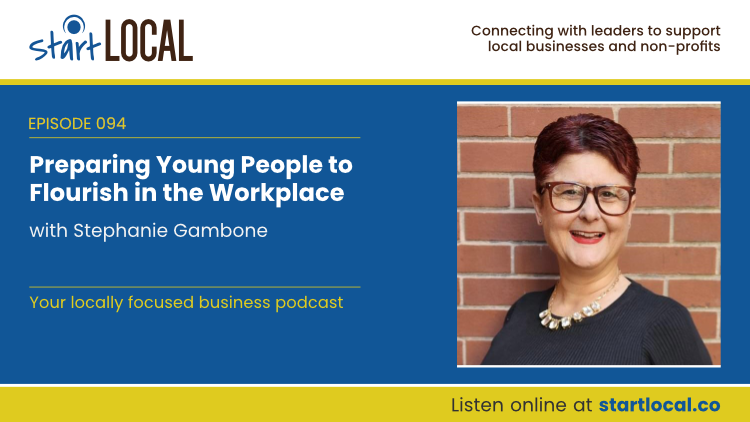
In classrooms across the country, students are learning to become the leaders of tomorrow. We chat with Stephanie Gambone, President and CEO, Junior Achievement of Southeastern Pennsylvania, to better understand how her organization supports local young people as they prepare to enter the workplace as adults. As JASEPA celebrates its 75th anniversary, we explore the programs the JASEPA delivers in Coatesville, Downingtown, and elsewhere across the Delaware Valley.
Links
Junior Achievement of Southeastern Pennsylvania
- Website: southeasternpa.ja.org
- Careers with JA SEPA: southeasternpa.ja.org/about/career-opportunities
- Volunteer: southeasternpa.ja.org/volunteer
- LinkedIn: linkedin.com/company/junior-achievement-southeastern-pa
- Facebook: facebook.com/JASoutheasternPA
- Instagram: instagram.com/ja_philly
- Stephanie Gambone on LinkedIn
Additional Links
- Forum of Executive Women
- Philadelphia 250
- The Fund for Women and Girls: Empowering Change in Chester County
Podcasts
Books
- Simply More: A Book for Anyone Who Has Been Told They Are Too Much by Cynthia Erivo
- The Next Level Nonprofit: Build a Dream Team + Increase Lasting Impact by Chris Lambert
Related Episodes
Transcript
Hey, Liam Dempsey here, jumping in before we get started to tell you all about our upcoming networking event. We’ll be gathering as a community in Coatesville on Wednesday, May 6th, from 5 to 7 pm. This opportunity to meet and mingle with business and nonprofit leaders from in and around Chester County is free to attend, but registration is required. Come on out for an evening of great people, meaningful conversations, and delicious local food and drink. Learn more and register over on our website at startlocal.co. I’ll see you there.
Intro: Welcome to Start Local, where we talk with business owners, leaders of nonprofits, and other members of our community focused on doing business in and around Chester County, Pennsylvania. Each episode will provide insight into the local business scene and tell you about opportunities to connect with and support businesses and nonprofits in your local area.
The Southern Chester County Chamber of Commerce promotes trade, commerce, industry, and sustainable economic development while supporting a diverse and growing marketplace. The Chamber is proud to partner with the Start Local podcast to raise the profile of businesses and nonprofits throughout Chester County. Learn more about the chamber at scccc. That’s scccc.com
Liam Dempsey: Hey. Hey. Welcome to the Start Local podcast. I’m Liam Dempsey, and we’re back in the studio for another conversation. Greetings and salutations, Erik Gudmundson. How are you?
Erik Gudmundson: I am doing very well, and I’m excited to be here. It’s another week, another episode and here we are.
Liam Dempsey: Onwards and upwards, right? Onwards and upwards. And maybe we’ll apologize in advance, folks, cause it’s a Friday afternoon. My brain is about two steps out the door already. So we’ll see how this goes.
But we are really excited to welcome Stephanie Gambone. Stephanie’s the President and CEO of Junior Achievement of Southeastern Pennsylvania. Welcome Stephanie. Thank you so much for joining us.
Stephanie Gambone: Thank you for having me.
Erik Gudmundson: Stephanie, it’s a pleasure to be able to talk in more detail here with you today, and I’m looking forward to learning more about Junior Achievement at Southeastern, PA.
Stephanie Gambone: Great. Thank you.
Liam Dempsey: Stephanie, I just shared that you’re the President and CEO of Junior Achievement of Southeastern Pennsylvania. JA for short, if you will. We expect that most of our listeners will have heard of Junior Achievement. It’s a well-established and well-known organization. But I’m going to guess that most folks might not know about Junior Achievement’s aims and its works and its programs. So can you share with us how Junior Achievement works to support communities across the country?
Stephanie Gambone: Absolutely. So globally, Junior Achievement’s mission is to prepare young people for a global economy. So what does that mean?
In Southeastern Pennsylvania, for us, it really is around economic mobility and making sure that young people have the tools, resources, and connections to really essentially be better off tomorrow than they are today. And that comes in the way of financial education, career readiness, and entrepreneurship. So we support young people across the country and in our community to really be future-ready.
Erik Gudmundson: So, Junior Achievement of Southeastern Pennsylvania works in Chester County and other areas across the Delaware Valley. Tell us where Junior Achievement has programs in Greater Philadelphia.
Stephanie Gambone: Absolutely. So Junior Achievements in Southeastern Pennsylvania. Starts in Philadelphia, Montgomery, Bucks, Delaware, Chester County, Lehigh Valley, Berks County, and Northampton. We primarily support schools and communities that are under resourced so they may not have the of resources when we think about economic mobility for young people. And so we want to make sure young people have access to resources they wouldn’t otherwise be connected to.
Liam Dempsey: Let’s home in on more closely on Chester County. Stephanie, can you kind of just list out? We’ll get into more details in due course, but just list out if you would. Where is Junior Achievement delivering programs to help our young people Within Chester County?
Stephanie Gambone: Junior Achievement is working in several communities. Coastville, Downingtown. We’ve had programming in Kenneth as well, primarily. The bulk of our programming is in the Coatesville community.
Erik Gudmundson: So I want to know more about your role personally at Junior Achievement. My understanding is you’re the president and CEO of Junior Achievement of Southeastern, PA. That’s a mouthful. I think sometimes you go by JA as well for an organization. Short name, right?
Stephanie Gambone: Yes.
Erik Gudmundson: How big of an organization is JA of SEPA if you’ll permit? Lots of acronyms, of course. And what does your day-to-day look like as the leader of the organization?
Stephanie Gambone: So Junior Achievement in our area supports over 25,000 young people in our eight-county footprint.
Erik Gudmundson: Wow, that’s a big group.
Stephanie Gambone: It is. And we could serve more because we know there’s young people out there that could benefit from the opportunities and the resources. We are a mighty small team of 13 here in our area. We are powered by volunteers, we are powered by educators and by our partners. And so we could not do the work that we do without all of the various stakeholders that support our work. We have thousands of volunteers, for example, over the course of the year, who support JA learning experiences.
For me, no day looks the same if you ask my 10-year-old. I have an incredibly boring job, and all I do is talk to people all day. That is true. I do talk to people all day. I don’t think it’s boring at all. So I really spend my days working within the community, working with our volunteers. Our school district partner, our nonprofit partners, really to ensure that we are providing the highest quality experiences we can for young people because they deserve it.
Erik Gudmundson: I’m just thinking of those numbers, he said in my head. 13 paid staff, 25,000 students, thousands of volunteers. How do you keep track of all that? Do you have spreadsheets upon spreadsheets? Is there some Master Junior Achievement national organization where you can take advantage of their planning resources, or how do you keep it all organized?
Stephanie Gambone: So. Junior Achievement is a federated model, essentially a franchise. And so we are connected to a national and global network. And all of our programming is run locally. So it’s the best of both worlds. We get to make decisions that are in the best interest of our community.
But to your point, we’re able to access the resources by being part of the national network. So we do have tools and systems and technology that support our ability to organize everything. And then I have a really good team that’s able to pull it all together locally as well. We are very relationship-driven, but we’re also data and information-driven as well.
Liam Dempsey: Let’s turn to your programs in Coatesville. JA is working closely with the Coatesville Area School District to implement a number of programs, as I understand that. Tell us about those, if you would.
Stephanie Gambone: We’re really proud of our partnership in Coatesville. We are working with the school district from a K to 12 strategy to really look at how can we support the both career readiness programming for young people as well as financial education across the continuum.
And a lot of times, individuals will say to me, well, what do you do for elementary school? It’s a great time to really get young people exposed to their communities, to their city, to their state, to understand what is possible in terms of various careers. So career exposure to get them to think about what they like to do, what they don’t like to do.
So we offer programming that really provides exposure opportunities for young people. We’re also working with the and with the young people in Coatesville around financial education. An example of that is our JA Finance Park program, which is the ability for young people in school to learn about finances. So all the things we may or may not have learned as adults or as young people around savings, and just investments, and your paycheck as an example.
And then what we find that is unique within our programming is the ability for young people to take what they learn in school and apply it in a real-world scenario.
So in JA Finance park as an example, young people get to adult for the day. So what does that mean? We bring a City, a 3,000 square foot city to Coatesville? We did it at the Moose Lodge just a few weeks ago. And so there’s banks, there’s grocery stores, etc. A young person walks in, and they get a Persona. I’m Liam, I’m single, and I have no kids. This is my job. And then they literally have to go through and make purchases, budget, and be an adult for the day.
And the aha, moments that I have witnessed personally for young people. Oh, now I know why the adults in my life ask me to turn off the lights. I didn’t realize child care was so expensive. And so again, there’s the curriculum and the in-classroom work that is incredibly important to have a foundation, but then the application of that is incredibly important so that it becomes real for young people. And so we’re continuing to work in Coatesville to build out, How do we ensure that young people across the district at every grade level have these age-appropriate types of experiences?
Erik Gudmundson: One thing we’ve documented on this podcast over all the many episodes we’ve recorded is that different areas of our county work very differently. They have different needs, different abilities, different strengths, and different weaknesses. All the different opportunities to help. So I heard you say you work with Kennet and Downingtown area school districts as well. Let’s talk about Downingtown for a minute. What do you do differently there than in Coatesville?
Stephanie Gambone: Absolutely. So in Downingtown, we’ve had a long history of partnership with the Downingtown Area School District. Very proud of that relationship.
And so a couple of years ago, they had an opportunity to rewrite their social studies curriculum. And that’s a pretty typical process that districts do every so many years. And in doing that, they built the JA curriculum into their elementary school social studies curriculum. So young people are having economics financial education delivered as a natural part of their coursework on a daily basis.
And so the JA program is not a one-off program. It is part of the school day, naturall part of every young person in the elementary grades receives the program through their social studies course. So it really is an embedded partnership with the district to make sure that young people are getting the type of financial education and economics education that is needed as part of their social studies curriculum.
Liam Dempsey: Stephanie, we know that Junior Achievement collaborates with local schools on its education programs. Are these after-school trainings or clubs, or are these the lessons rolled into the classroom, the school time activities?
Stephanie Gambone: A little bit of both. So a lot of the programming that we offer is delivered during the school day. I mentioned a little while ago. There’s a curriculum, for example, around financial education that is delivered by teachers in the school.
And we also offer programming outside of the school building. It could be a simulation that is held off-site at a university or community center, et cetera. We also offer after-school programming. So there are a variety of places that young people receive JA programming.
Erik Gudmundson: Man, you mentioned earlier about some of the things you do to teach financial literacy. Junior Achievement specifically is committed, I read, to economic mobility. And you know, that’s Financial literacy, I would say, is one part of that. So specifically, economic mobility works to make sure that young people are better off tomorrow than they are today. That’s a really big statement. What does that mean as Junior Achievement of Southeastern PA crafts programs and initiatives to achieve that goal?
Stephanie Gambone: So there are several building blocks that we really lean on, particularly when we’re looking at young people from elementary school through high school. One is around student engagement and growth mindset. So what do I mean by that?
Research demonstrates that when young people are engaged in experiences, academic or otherwise, it becomes. It becomes more exciting to them, more interesting, and they’re more willing to continue to participate. And it also gives young people an opportunity to think about the future and what is possible. An example of that is we had a young man in middle school in one of our programs that said to his teacher prior to participating in Junior Achievement, particularly in JF Finance Park, I really didn’t think about my future beyond high school and today gave me an opportunity to think about what’s possible. So that is really, really about engagement and it’s about thinking about the future. And that is really important for young people.
A really big piece of what we do is around skills and competencies. We want young people to learn something new. And it could be a really tangible skill, like understanding finances. It could be a power skill like teamwork and collaboration. And all of those skills are going to really allow young people to think about what’s next for them, whether it’s in education, work, or some type of other post-secondary option.
We also really think about educational and academic attainment. We want young people to really see school as something that they enjoy, that they’re engaged in, that’s important, is going to really help them with their future.
And we want to help them be successful. Whether it’s their academic achievement, their attendance, their graduation rates. Everything that we do is about wrapping around supports and resources so young people can be successful in their education and workforce experiences.
And the last piece, which is not last because it’s not important, I actually think it’s incredibly important is access to networks and social capital, really making sure that young people, particularly young people that might not have natural networks built into their everyday experiences, are able to see people like themselves in the JA experiences, meet new people that might be valuable to them as they think about building their professional network and having experiences that they might not otherwise have. It could be going to a college or university, understanding STEM careers.
And so all of these building blocks together really give young people the tools, the resources, and the connections to have a future that is defined by them. Because that’s also really important to us, that young people are having voice and choice, and they know what is possible and what is available to them.
Liam Dempsey: Let’s stay focused on that. Networking and social capital. You know, you just described how JA works to enable young people to see folks who look like them and have similar backgrounds in jobs that may potentially be of interest to them. But networking is active. Networking is, I don’t want to say necessarily minute to minute, hour to hour, and day to day, but to have a network takes a lot of work, takes a lot of energy. How do you support students who are in middle school or in high school, maybe go away for four years to school somewhere? How do you get them to think about and build a network when perhaps at their age, I was nowhere near capable or willing to do the kind of work that it takes to build and sustain a professional network?
Stephanie Gambone: So when we think about networks, it really varies along a continuum. And so I think what you’re talking about is really important, particularly for our high school students who are in some of our longer, kind of deeper impact programs. They are building real relationships with the coaches, the mentors in their experiences, and they stay in touch with them well beyond their program. And that does take work, to your point, kind of on both sides.
But when we think about middle school students or even elementary school, for us, when we think about social capital and networks, it really is about even those early experiences of it could be simply, I now see somebody that looks like me that is in this job, and I know that that can be possible. That opens up a world of opportunity.
I now, you know, went to a university, and no one in my family or no one I knew went to college. And so now I know that’s possible. When we do our job shadow programs, a lot of times it’s exposing young people to businesses and careers that they might not have had access to otherwise. And so all of that is part of networks and opportunity.
And to your point, there are the building those larger longer-term networks. And we really do support our high school students in particular to think about how do you build a LinkedIn profile? How do you kind of stay in touch with the individuals?
We actually just launched a alumni campaign. It’s our 75th anniversary this year. And so we want to bring back everybody who’s engaged with JA in some way. And when I hear stories, I could be at a party or a work event, and when I say I worked with JA, oh, my father did JA or I did JA and it could have been five years ago, 20 years ago. So the experience really resonates with individuals, and they’re able to talk about the change that it had made in their life. And so all of that for us is about building networks over time.
Erik Gudmundson: When I think of foundations and large donors and where they like to give their money, it’s really hard to understand those perceptions and experiences and some of those other sort of more emotional benefits that you were just describing. Talk about how Junior Achievement of Southeastern PA measures the impact of its programs in quantitative terms that can be translated to grant proposals so that you can keep the money coming in.
Stephanie Gambone: So in several ways, and some of it is program dependent, when we think about that particular program and impacting individuals. So, a couple of things.
One, we are able to demonstrate the skills and competencies that young people learn. So we are able to share that in some of our programs, young people are earning credentials. So they are able to say, I’ve earned this credential as a result of learning X, Y, and Z.
We are oftentimes able to demonstrate young people have a different perspective around careers, around work, and around education. And so we do measure. I now know this as a result of, or I feel differently about X as a result of, as well as just connection to opportunities. And so it really is about measuring the change in either again, person’s mindset as skill they learned or something very tangible that they gained as a result of it.
And as we continue to scale our programming, particularly in district-wide programs, community-wide experiences, we’re also looking at things like academic achievement, connections to post-secondary, you know, higher rates of employment. And so we look at both the individual young person as well as how we are impacting communities, at least large.
Liam Dempsey: We hear a lot on this show from other nonprofit leaders that fundraising is increasingly challenging for just about all of our nonprofits locally, if not, actually all. Which kind of begs the question of you, Stephanie, is how is JA of Southeastern Pennsylvania funded?
Stephanie Gambone: We have a diverse set of funding resources and between foundations and our corporate partners, we’re in about 70% of our funding and that includes traditional philanthropic foundations as well as corporate foundations and other forms of corporate giving.
We have about 10 to 15% program revenue. And what that means is school districts or other partners are paying us for a particular service or a program and then we have about 5 to 7% individuals and then the rest is some small amount government funding, special events in kind and other resources. So we rely heavily on corporate and philanthropic support in order to do our work.
But over the years have been, particularly over the past couple of years, have begun to diversify our revenue. As we think about scale and supporting more young people, more communities, we know that we need to diversify our sources.
Erik Gudmundson: Let’s shift our focus to you personally. A quick check of your LinkedIn profile makes it clear that you have spent your entire career supporting young people achieve greater economic stability, and that’s really impressive. What about that cause speaks so strongly to you?
Stephanie Gambone: First of all, I am one of those kids. So I was born in Philadelphia, first generation college student, teen parents didn’t have a ton of support navigating what the future would be. And so personally I can resonate with a lot of the young people that we serve.
I went to college, fortunate enough to go to college and I thought I was going to go to law school. And I interned at the district Attorney’s office in Philadelphia, second semester, senior year in college. Not a great time to realize that you don’t want to do that. And that’s exactly what happens. And the defining moment for me is I had a great mentor supervisor who allowed us to go to court quite a bit.
And I remember sitting in court and I saw a 17 year old boy, young man, on trial for murder. And I can see that still today, many, many years later. And I said to myself, I don’t want to see anybody at this point in their life. So May of the year I was graduating, I said I’m not going to law school. So I started working at a high school in Philadelphia that summer trying to figure out what I was going to do. And I absolutely fell in love with working with young people and, and 30 years later, the rest is history. So for me it’s both personal, but it’s also I seen what is possible, but also what can happen when we don’t give young people an opportunity. And that’s really important for me every day.
Liam Dempsey: Through organizations like the Forum of executive women and Philadelphia 250, it’s pretty clear that you’re committed to supporting women in leadership positions across our civic life and our economy. So as a leader yourself, what conversations are you having with other leaders to ensure that women have an equal seat at the table? And I suppose to ask this another way, what specific messages can more of us share to move equality forward?
Stephanie Gambone: It is 100% our responsibility to both honor the legacy of those before us and show young people of today what is possible and to bring them forward, bring them to the table, give them opportunities, young women, young girls, as well as everybody. And so every chance I have to tell my peer group this is what we could do, we have to bring folks along with us.
The second piece that is really important is we have to impact policy change. There are so many policies that negatively impact women, and we really need to make sure that we are addressing the empowerment part of it, but also the policy part of it. And if we could do both of those, then I believe that we can have moments where women are not the first. I want to stop hearing she’s the first, I’m the first, because this should just be baked into who we are as a society.
Erik Gudmundson: It’s interesting to hear your career journey and how it relates to your views on all these items. I heard that you are a lover of true crime podcasts and books, and knowing now that you had this background with intent of going into law, I can better appreciate maybe why you enjoy that genre so much. But tell us what podcasts you’re binging right now and what books you’re reading at the moment.
Stephanie Gambone: Big fan of Crime Junkie. Amazing, amazing women who tell stories of individuals whose stories probably would not have been told otherwise, which is probably a theme you’re picking up on, is incredibly important to me. And what is most interesting to me is the psychology of it all and the humanity of it all and really understanding people. So I’m a big fan. They’re a fantastic storyteller, so I encourage anybody who’s interested, you will get hooked. So if you don’t have time, don’t do it right now.
So I was thinking about the book question and two books that I’m reading right now. One is, Simply More by Cynthia Erivo, which is I was drawn to it and I’m looking at the title as I’m sharing it says a book for anyone who’s been told they’re too much. And throughout my entire career, my personal life, that has been a theme. And I’ve learned at 50 plus years old that I’m embracing that I’m too much. And bringing folks along who Honor that and support that. So that’s one book and the other is the next level nonprofit around building a dream team with lasting impact. We’ve got really big goals at JA and I can’t do it without my team. And it’s really important that I’m building and supporting a team that’s going to impact young people.
Liam Dempsey: I love that book by Cynthia Erivo. I didn’t know she had one out. You’re too much. For anyone who’s been told you’re too much. I love that. I love your embracing that. I love that you have heard that and now you own it. That’s fantastic. Folks listening, we’ll be sure to include links to that podcast and to those books over on the show Notes at startlocal.co.
Let’s swing back towards JA of Southeastern Pennsylvania. Stephanie, you shared that the organization is celebrating its 75th anniversary this year. That’s an impressive accomplishment under any circumstances. So congratulations to you.
Stephanie Gambone: Thank you
Liam Dempsey: Your colleagues and your forebears and all the volunteers and former employees and trustees and board members who have made that happen. Let’s look forward to the next 75. What are your plans for your long standing chapter of Junior Achievement?
Stephanie Gambone: It is, it’s an exciting time. To your point, 75 years, it’s a little hard to believe sometimes. So one is honoring the legacy of the 75 years before us. I mean, the history is incredible, the stories are incredible. The experiences of alum we’re really trying to lift up.
Think about it. Within 75 years, there are people in the workplace, there are people who have retired. I had an individual that did JA 50 years ago and brought me the product that she made and she shared with me. This is how it impacted my life. So we want to lift up those stories because they’re really, really powerful.
And as we think about the future and the next 75 years, it really is about how do we ensure that all young people in our eight counties have the tools and resources they need to be successful. We have communities in our counties that do not have the resources for young people. We have young people are our future. And I don’t mean that in a cliche way. They have so much hope and so much possibility and we need to make sure they have deep experiences and connections that are going to allow them to move forward in their future.
So what does that look like from a really concrete perspective? Deepening our impact and really honing in on programs and learning experiences that are going to have long term impacts and effects for young people.
The second piece is scale, yes, 25,000 plus is great, we’re super proud of that. But there are many more young people in our eight counties that could benefit. So we want to make sure every young person who deserves and who wants the JA experience gets one. And so that’s incredibly important.
And then the last piece I would say is continuing to pay attention to our community because at the end of the day we want to make sure what we’re doing is relevant. With the time and education workforce have drastically changed in the past couple years and will continue to change. So we need to stay relevant, that we are listening to our communities, our school districts and our young people, and that we adopt and pivot as needed. So we have to keep doing that in the next 75 years.
Erik Gudmundson: You just touched on something that I want to dig into a little deeper, if I may. Liam and I both work in technology and so we’re very much swept up into that in the sense that we can directly appreciate just how quickly it changes. And it’s an ever faster moving treadmill and if you don’t keep up with it, we’re going to fall and get belt burn right on our face. So with that in mind, particularly in the ever increasing power of AI these days, every day we hear something new that AI is up to, How is JA adapting its programs to keep up with or even maybe stay ahead of the times where technology just keeps changing more and more rapidly?
Stephanie Gambone: So one, making sure that young people have the foundational skills that allow them to adapt in any environment. And in my 30 year career, they have not changed. Teamwork, collaboration, curiosity, all the things that are going to allow a young person and an adult to be able to navigate any environment, we really hone in on those foundational power skills. So that’s first and foremost.
Second, JA is constantly reevaluating at the national level and at the local level. Our curriculum, our learning experiences, testing them with young people, with our education partners to make sure that they are with our employers, to make sure that what we’re delivering is relevant and when it’s not, making those adjustments. And then very tactically building in the technology, AI, et cetera into the programs that we’re offering, whether that is the delivery, so meaning young people are doing certain things over tablets and various forms of technology or the learning and understanding. So nothing we do is stagnant. It really is.
And I think the past five years, six years, I guess now have really demonstrated we really have to be able to move just as quickly as tTechnology, and young people, I mean they know it far more than any of us do. And so we need to be able to meet their needs at the pace in which it needs to happen. So JA is always kind of looking at, are we relevant, Are we meeting the needs of young people and our partners and adapting as needed.
Liam Dempsey: I want to stay on that topic of collaboration and working together and teamwork. Junior Achievement, as we’ve shared, is a national organization. So inevitably they’re going to be nationwide priorities for the organization. Your organization, your chapter in Southeastern Pennsylvania is going to have your own local priorities. And I expect that the state of Pennsylvania, the government, if you will, the Commonwealth, and all the school districts that you work in across the eight counties are all going to have their own educational priorities as well. So as the President and CEO of Junior Achievement of Southeastern PA, how are you navigating all of that to really figure out how best to serve the children in your communities, in your hometowns, if you will?
Stephanie Gambone: So I joined JA about four years ago as president and CEO, and pretty quickly I went into a listening tour for about six months or so. So it’s really, really important that we listen to our local community stakeholders, young people, educators, et cetera. And then we developed a strategic plan based on that. And that’s how we landed on economic mobility.
So while we have this national global vision around making sure young people are prepared, how that translated to us locally, particularly given the high rates of poverty we have in Philadelphia and other communities, was around economic mobility. And so that was a choice we were able to make locally because that’s what was needed in our community.
And then when we look at the school districts, the state, et cetera, my job, the board’s job, is to look at all of these priorities and then say, this is where JA can support that. What I have found really beneficial in Southeastern Pennsylvania is we’re all pretty aligned around the need to support young people. This global picture of economic mobility focused on career, learning and financial education. And so we’re able then to say to a school district, we know these are your priorities. Here’s how we can support you. And so it does require a lot of listening, a lot of conversations, a lot of co creating, and that is really important. And then a aligning around that based on what’s, I put young people at the center of everything. So aligning around what is best for young people, ultimately
Erik Gudmundson: The listening and the co creating aspect is interesting to me because we haven’t talked about chambers of commerce, local businesses, local workforce development boards, organizations like that, that all really try to Inform school districts about what they need the workforce to be? What kind of skills are they looking for to be able to fill jobs and roles that they have open? Do you work with those types of organizations directly or how do you interact with, say, the chambers and workforce development boards?
Stephanie Gambone: Yes, we do. We work across the counties. We work with a variety of organizations, Chambers, workforce boards, looking at data, listening to employers. I actually sit on the Philadelphia Workforce board as a board member. And it really is important that we’re at the table, that we’re at the table in a variety of different ways. It doesn’t just have to be as a board member, but that we are in those conversations and we’re listening to all the stakeholders, we’re looking at the data and making sure that we are supporting young people in ways where there are going to be opportunity. Because the last thing you want to do is support young people and then the opportunities are not there.
And honestly, some of this is five, ten years down the road, which is why the foundational skills aren’t incredibly important. But all of those various groups have to work together to ultimately impact our communities and their local economy.
Erik Gudmundson: Name a local business or nonprofit that more folks should know about. I expect you probably run across a lot in your travels with all the listening and all the contacts that you have.
Stephanie Gambone: I don’t think this will be a surprise based on what I’ve shared already, but big fan of the Fund for Women and Girls in Chester County. Both because of, well, for a variety of reasons. But the focus on policy and programming in support of young women and girls is just so core to the work that I do, the way that I choose to live and show up every day, and so really supportive. And so for folks that are not aware of them, definitely check them out. They are also a small but mighty teen that do some really impactful work, not just in the county, but across the commonwealth.
Liam Dempsey: We recently spoke with the executive director of the Fund for Women and Girls, Cheryl Brubaker. So if folks are not familiar with that organization, surf over to our website and we’ll include a link to our conversation with Cheryl. It’s over at startlocal.co.
Stephanie, I expect you’re always looking for volunteers. So when I ask you, are you hiring? We’re going to assume yes, you are looking for volunteers. Tell us what kind of volunteers you’d like to see get involved. But also, are you hiring as an organization? Are you looking for new team members?
Stephanie Gambone: Yes, on both accounts. So we are hiring paid staff. Absolutely. And so anybody who is Interested in learning more about that can go to our website at southeasternpa.ja.org. And we are also, as you mentioned, looking for volunteers.
And honestly, what I really want people to hear is if you have any interest in supporting young people around career readiness and financial education, we can find something for you to do. Do not worry if you have a depth of knowledge in a particular area. Everything that we do is meant to be turnkey. And what that means is we’re scripting you, we are guiding you, we are supporting you.
Obviously, there’s some ability for you to bring your own life and work into it, but we don’t want anybody to be afraid. My team supports our volunteers in really extensive ways. So don’t be afraid to reach out. If you want to support young people, we’ll find a way to get you connected.
Erik Gudmundson: How can the local community support you and the many efforts you have going? You mentioned, you know, soliciting volunteers there, but what else can they do? And maybe what’s the best way for them to submit their, their interest as a volunteer?
Stephanie Gambone: Absolutely. So I would say one. You know, please, please check out our website. There’s all of our volunteer and other opportunities are on that again, southeasternpa.ja.org.
And for the community, if you’re interested, reach out and we’ll find a way to get you connected. We have a board, a young professional board, volunteer opportunities. We have ways for you to help highlight our work, whether it’s in newsletters, social media. Again, we have a small paid staff and so anytime we can amplify our work, get it out to the community, businesses, school districts, we welcome opportunities to do that.
Erik Gudmundson: Stephanie Gambone, President and CEO of Junior Achievement of Southeastern Pennsylvania, where can listeners connect with you and learn more about your programs? In our corner of the Delaware Valley,
Stephanie Gambone: I recommend visiting our website, southeasternpa.ja.org.
Liam Dempsey: Stephanie, thank you so much for joining us today. I appreciate the time and energy you’ve put into our conversation. I’ve really enjoyed learning about Junior Achievement Southeastern PA. I have a much better understanding of what you do and how you’re helping our young people. Thanks for your time today. Really enjoyed it.
Stephanie Gambone: Thank you.
Erik Gudmundson: Yeah, Stephanie, really definitely appreciate your time. I learned a lot about Junior Achievement today, so my objective was accomplished. I’m very happy about that and also have to thank my co host, Liam Dempsey. Couldn’t have done it without you. As always, I’m Erik Gudmundson.
The Start Local podcast is published every two weeks. We invite you to subscribe to Start Local using your favorite podcast app or ask your smart speaker to play the Start Local podcast. You can visit the Start Local website at startlocal.co for show notes including links mentioned on this show and summaries of past episodes.
We hope you join us for the next episode. Thank you for listening.