Podcast published: May 22, 2026
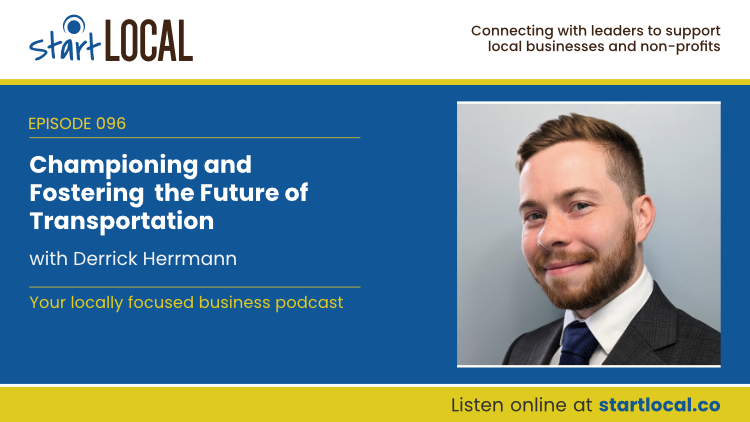
With transportation touching nearly every aspect of daily life, advancing technology is rapidly changing how we get around our local region. We sit down with Derrick Herrmann, Chief of Transformational Technology at PennDOT, to explore how the agency is preparing for a future that includes AI-powered traffic systems, automated vehicles, EV charging infrastructure, drones, and advanced air mobility. Derrick walks us through PennDOT’s role in regulating emerging transportation technologies, supporting first responders, and using real-time data to improve roadway safety and reduce congestion – and so much more.
Links
Pennsylvania Department of Transportation
- Website: pa.gov/agencies/penndot
- Careers with PennDOT: pa.gov/agencies/employment/penndot
- PennDOT’s upcoming ~$100million of EV charger funding: pa.gov/evcommunity
- Open data platform: data-pennshare.opendata.arcgis.com
- GIS layers for PennDOT: gis.penndot.pa.gov/onemap
- PennStart: pennstart.org
Additional Links
- AV Ride
- Beta Technologies
- Drone 814
- GovernmentJobs.com
- Pennsylvania SPCA
- State Employees Combined Appeal (SECA)
Transportation Organizations
- AASHTO (American Association of State Highway and Transportation Officials)
- ITS America
- Federal Aviation Administration (FAA)
- NASEO (National Association of State Energy Officials)
- National Highway Traffic Safety Administration (NHTSA)
- PAVE (Partners for Automated Vehicle Education)
- Pennsylvania Turnpike Commission
- RIDC of Westmoreland
- Transportation Management Association of Chester County (TMACC)
Pennsylvania Universities
- Bucknell University
- Carnegie Mellon University
- Safety21 at Carnegie Mellon University
- Larson Transportation Institute at Penn State
- Harrisburg University
Local Bands and Artists
- The Menzingers – Tasker-Morris Station
- The Wonder Years – A Raindance in Traffic
- The Starting Line – Island
- Carly Cosgrove
- Tigers Jaw
- Balance and Composure
- Title Fight
- Bike Routes
- August Burns Red
- Modern Baseball
- Sweet Pill
- mewithoutYou
- Kid Dynamite
- Grayscale
- Valencia
- Man Overboard
- Handguns
Related Episodes
Transcript
Intro: Welcome to Start Local, where we talk with business owners, leaders of nonprofits, and other members of our community focused on doing business in and around Chester County, Pennsylvania. Each episode will provide insight into the local business scene and tell you about opportunities to connect with and support businesses and nonprofits in your local area.
The Southern Chester County Chamber of Commerce promotes trade, commerce, industry, and sustainable economic development while supporting a diverse and growing marketplace. The Chamber is proud to partner with the Start Local podcast to raise the profile of businesses and nonprofits throughout Chester County. Learn more about the chamber at scccc. That’s scccc.com
Liam Dempsey: Hey. Hey. Welcome to the Start Local podcast. I am Liam Dempsey, and as always, Erik Gudmundson and I are here, and we’re ready for another conversation. Erik, how are you today?
Erik Gudmundson: We’re ready to get the show on the road.
Liam Dempsey: We sure are. We got it on the road earlier today. We were out and about networking and meeting people at their workplaces for this podcast. That was fun. Twice one day. Erik, I’m always excited to get to see you. That often it was.
Erik Gudmundson: But, Liam, you didn’t even pick up the pun that I dumped on the road.
Liam Dempsey: Yeah, you’re good, you’re good, you’re good.
Erik Gudmundson: I missed. Not that good, clearly.
Liam Dempsey: Today, we are pleased to welcome Derrick Herrmann to the show. Derrick is the Chief of Transformational Technology with the Pennsylvania Department of Transportation, or PennDOT, as we all know it. Welcome, Derrick.
Derrick Herrmann: Hey, guys. Thanks for having me. It’s really cool to be here. Excited to talk transportation today.
Erik Gudmundson: Yeah, me too. Derrick, ever since we met at the Transportation Management of Chester County, the TMAC organization’s breakfast, and heard you speak, I’ve been really looking forward to this interview just so that more people can hear what you have to say. So it was fascinating. So I’m looking forward to the conversation.
Liam Dempsey: Yeah, I am, too. And that’s exactly that. Erik and I were both in the room when Derrick gave a presentation at the TMC’s Breakfast monthly breakfast meeting. And he was talking all about what PennDOT was doing with technology. And it’s super exciting. Exciting. And I looked at Erik, and I said, we need to have this guy on the podcast. And sure we are. Sure, we are.
So, Derrick, as I shared earlier, your job title is Chief of Transformational Technology with PennDOT. We know that means you’re looking at technology and how that technology will affect travel across our state, the entirety of the state. But take a moment. Help us understand your duties and responsibilities. Please share the specifics of what you actually do for PennDOT.
Derrick Herrmann: Yeah, happy to. So our division’s small, it’s a kind of cross-functional team. We’re about four other people that I manage. So we sit in Harrisburg and the PennDOT Central Office. And really, what we’re doing is trying to integrate emerging technologies into transportation.
So, we know these things are coming, whether it’s AI-connected and automated vehicles, personal delivery devices, and now we have things like advanced air mobility, which are essentially drones that are larger and carry people and goods. We’re really trying to integrate those things, understand them, regulate them, build policy around them, and at the ultimate end goal is to ensure that they’re safe and useful tools for people, you know, people that live in the Commonwealth and who will use transportation networks. That also extends into things like alternative fueling. And we’re doing a lot to build out EV charging stations across the state with some federal dollars that have been granted to us. And other than that, working with universities, private companies, and anyone that’s involved in kind of new and emerging transportation trends to try to understand those and kind of wrap our arms around them and make sure that they’re handled and handled appropriately in Pennsylvania.
Erik Gudmundson: And those are some fascinating topics. And before we get into those novel transportation topics, I first wanted to ask you about some basics. Across the state, PennDOT is responsible for about 40,000 miles of roadway, 25,400 bridges, 11.8 million registered vehicles, and more. So let’s zero in on Chester County for a moment. Can you share some numbers about how many roads, cars, trains, and transit systems in general that PennDOT manages across our little corner of the road here?
Derrick Herrmann: Yeah, so we’re broken up into engineering districts. So we have 11 of those around the state. District 6 is the one that’s responsible for the southeast region. So that would cover Bucks, Chester, Delaware, Montgomery and Philadelphia counties. So Philly and the Collard counties. It’s directly responsible for about 3,500 miles of state-maintained roads and 2,760 bridges. So the span of what is actually covered is massive. PennDOT also has about 11.8 million registered vehicles across the entire Commonwealth.
At the end of 2025, Chester County had around 503,000 of those vehicle registrations. So a pretty sizable amount. And 15,300 or so were actually electric vehicles as well. So that totals to about 3%. And believe it or not, that’s about double the statewide average for EV registration. So Chester County’s doing pretty good in my book.
On top of that, we have a whole 65 different operating railroads, 52 transit systems. Obviously, SEPTA being the largest of those operating things like regional rail service in Chester county, of course, and statewide, we have 32 fixed route transit systems as well.
So PennDOT’s role in that really is planning grants, safety, capital programming, you know, SEPTA and the like, they’ll handle things like the data day-to-day operations. But anyone that really is kind of one of those data nerds and really wants to jump in and see just the absolute massive wealth of things that PennDOT has to deal with.
We have a number of GIS resources you can jump into. Things like our one map. We do publish a lot of statistics, whether it’s crashes or other things like vehicle miles traveled and lane miles by county. We have all that out on our website. And we also have open data portals, such as Penshare, with a whole ton of GIS resources. So encourage anyone to check that out if you kind of want to see the true span of transportation in the Commonwealth. It’s really massive once you take a step back and kind of look at it.
Liam Dempsey: Boy, I sure hope one of our listeners does something with all that open data because I love data, but I don’t have a mind to get my head around that kind of enormity. But I just want to clarify one number that you shared, Derrick, if I can. I think I heard you say that Chester County has 503,000 vehicles, registered vehicles, and if that’s correct, there are about 550,000 people top to bottom in Chester County. So that’s almost one to one. That’s kind of a mind blowing stat for me. Thank you for sharing that. You’re nodding your head, but I’m understanding that you’re saying that I’m right on my 500 3000.
Derrick Herrmann: You’re almost right on there. Yeah. So it is pretty interesting and I think counties are all different. Like you have a lot of folks in the Southeast that they’ll be multi vehicle families, for example. And that actually does change kind of like as you go across the Commonwealth and depending where you are. So definitely an interesting little tidbit there about Chester County. Yeah.
Liam Dempsey: As Erik shared when we were getting started that we met you at a recent TMAC breakfast briefing and Tim Phelps, who heads up TMAC, has been on the show before. So we’ll be sure to link to his conversation over on the show notes at startlocal.co. But part of your presentation was how PennDOT is approaching technology. Electric vehicles, automated vehicles, unmanned aerial vehicles, the UAV, and even more. You’re talking about even more than that. So give us just one or two of the talking Points from the briefing perhaps that might be of interest or value to local businesses or nonprofit leaders.
Derrick Herrmann: Yeah. So I’ll give you two interesting ones that I think are kind of at the forefront and something that’s, that’s really happening today, even.
One, there’s an insane wealth of data that comes with transportation. So even more as vehicles continue to get more and more complex and we’re looking at using that to provide a safer, more efficient transportation system. So the same thing that we was also presented at that TMAC briefing, District 6 down there in southeast PA, was presenting the i76 Transform 76 project, which uses analytics and automation to change posted speeds and warn drivers of queues along I76 there.
Using that data, and really it truly is real time data coming off of vehicles, it allowed us to reduce rear end crashes up to 32%, which is significant, and serious injuries up to 62%, which we’re really proud of that project. You know, you start to think about it and take it a step further. AI is already obviously a practical thing in transportation. So we can extend this data to things like real time traffic management, predictive safety analytics, and we can be just faster and quicker with our response to things that happen on the roadway, better and quicker planning for corridor operations.
So really the Commonwealth and under the leadership of the Shapiro Admin, has been already enacting policies and providing AI tools to enhance our employees. And that’s something that we’re really looking to get into our hands to make ourselves better informed and quicker to respond to things. Always keeping a human in the loop, to be clear. But AI is certainly something that’s already made a huge difference in Pennsylvania and PennDOT specifically. And we’re looking to leverage that just to make people’s lives better. Better.
Another great talking point that I’d love to shout out now is that it’s really now time to get ready for automated vehicles and personal delivery devices. For so many years in Pennsylvania, and dating all the way back to 2012, when a first AV really hit the road in PA, these companies have just been testing here. And a large part of that is because Pennsylvania is a complex system. We have difficult weather, things like the Pittsburgh left that these companies just haven’t been used to. But the reality is where we’re at today is these companies, Waymo and some of these others out there are ready to operate in Pennsylvania. There’s already testing out in Philadelphia and Pittsburgh. And Waymo has already announced that 2026, they’ll launch a commercial operation to provide driverless ride service in Philadelphia.
We also have now some UberEats delivery robots operating in Philadelphia through a company called AV Ride. So really my, my talking point with that would be, it’s really time to get automation ready and understand that it’s here. And we’re, we’re going to do our best to keep our hands around that and make sure it’s regulated properly and enable and help our municipalities to kind of be ready for those companies and these new types of transportation to come to their locality.
Erik Gudmundson: It’s fascinating to think about PennDOT’s role because I think most people assume PennDOT is just about plowing snow and filling potholes and there’s so much more there just thinking about the raw data alone, let alone all these new technologies that are coming on the market and trying to find a home and trying to coexist with all of our existing perceptions and our existing tools and things like that.
One example of this new research PennDOT is involved in is PennStart. Located just outside Pittsburgh, PennStart is a closed-loop, state-of-the-art proving ground designed to accelerate innovation in emerging transportation technology, improve the safety and efficiency of transportation infrastructure, enhance traffic incident management training, and support regional economic development. So, those are the bullet points. But tell us about Penn Start in your own words.
Derrick Herrmann: Yeah, sure. So PennStart, it’s, believe it or not, it’s an acronym. So it stands for Pennsylvania Safety, Transportation, and Research Track. It did just go underneath construction earlier this last fall. So fall of 2025, we’re hoping that first phase of it opens up this coming fall, and some paving will happen, I think early spring of 2027. So really what the first phase of this will look like, it’s a closed-loop high-speed test track. Like you mentioned, it mimics highways. So it’s really actually designed against PennDOT standards for a literal highway up to 70 miles per hour.
We are basically working with what’s called RIDC of Westmoreland County. So out there in Mount Pleasant, Pennsy, the track will be located. They’re identifying partnerships with companies like automated vehicle companies, vehicle manufacturers, companies that do things like simulation, and attracting them to come to the track and test these things out off of the road before they come actually onto the road and impact the public or what have you.
So at a high level, the idea is any new emerging technology, whether it’s an automated vehicle or new tolling technology, new signal technology, connected vehicle technology, all of that can be tested out, proved out at this high speed test track, and then we can take that out onto the road after we know that it works and it’s safe. So that’s at the highest level of the idea. It is a partnership between RIDC and PennDOT as well as the Pennsylvania Turnpike Commission, Carnegie Mellon, and Westmoreland County. And we’re putting some funding towards that to build this track.
And, and one of the other major ideas here is that a lot of this new technology brings a lot of new complexities for incident responders. So first responders are a huge concern for PennDOT. We’re always trying to make sure that they’re ready for anything new.
So PennStart will serve as a kind of a regional hub where we can bring in these first responders and get them exposed to things like automated vehicles, how to react to them, how to disable the automation, how to move them, anything like that, new vehicle fires with electric vehicles. Any really new and emerging technology that first responders need training on, we can do it there at PennStart. So it gives us a really solid option. And really this doesn’t exist anywhere kind of on the Mid Atlantic region. So it will serve as sort of that central hub in the Mid Atlantic for a number of years to come, I hope. And like I said, we’re hoping to have that open.
I’m thinking fall in 2026 if all goes well, if we get to paving. There’s a chance it could push back a little bit into spring of 2027. But the facility will be there for us to prove out these new technologies and hopefully get ahead of them and around them with training for our first responders.
Liam Dempsey: In a previous answer, Derrick, you shared some treats for the data nerds in the audience. I want to give something to the policy wonks if we can. Let’s focus on legislation for a moment. PA Act 130 and PA Act 106 provide a framework for how AV and PDD vehicles should operate, focusing on areas like safety, licensing, insurance, operations on public roads, and the like. Talk to us briefly about some of the requirements for operating EVs and PDDs that citizens accustomed to traditional vehicles may have never thought about. And to start your answer, just remind us what AV&PDD stands for.
Derrick Herrmann: Yeah, we love to get lost in our acronym, too, don’t we? Yeah. So AVs are automated vehicles by law, actually, and in the vehicle code, they’re defined as highly automated vehicles in Pennsylvania. So sometimes you’ll hear us call them havs as well.
PDDs are called personal delivery devices. You might also refer to those as just sidewalk delivery robots, Personal Delivery robots. So those are the Uber Eats guys out there operating in Philadelphia, in the sidewalks out there.
So, a number of things. The axe essentially designated PennDOT for both the personal delivery devices and automated vehicles as the sole regulatory authority. So, they included local preemption. And really, the intent behind that was to make sure that across the commonwealth, these were being regulated in a standard way. And essentially, what that means is these companies have to come in, they go through what’s called a self-certification process or an authorization. They apply to PennDOT, they build out things like their safety case framework, they provide all sorts of consents, information for how first responders can react to these different technologies, and they have to build out what’s called a safety management plan.
So within that, the main focus is a safety case framework. So they take a framework and organized approach to describing how they go about these operations safely when things happen, and if there’s an incident, how they respond to them and how they’ll ensure that they don’t cause any issues. Beyond that, it has reporting requirements among many other things. So these are in a few of our different publications.
And essentially these companies will go through that authorization process as basically filling out a couple forms. They come to PennDOT, we go through a pretty significant review and we’ll go back and forth with these companies as we try to understand how they operate and ensure that they’re operating safely and meeting all of our standards for that. So, PDDs and AVs, really, it’s treated almost exactly the same. They have quarterly reporting requirements, accident reporting after they are certified, and then generally, we keep an eye on everything going on. So as we get complaint reports, accident reports, things like that, we do have options to suspend or revoke their authorizations or certifications to operate. And that’s something that, you know, is definitely going to keep us pretty busy over time as these things scale up. Just constantly trying to keep an eye on these things and ensure that they’re doing what they should be doing safely.
Erik Gudmundson: As Chief of Transformational Technology for PennDOT, you and your team must be at the forefront of technology and transportation. Your job requires that. How much of your work is actually focused on learning about technology versus attending conferences, whether you’re learning or presenting, and the like. So I’m wondering, how much time do you actually stay on? Put it this way: what do you do to stay on top of the latest transportation-related technology? Because it seems like AI is particularly changing every two weeks. So like, how do you, how do you, how do you stay current on all these changes happening so rapidly? All around us.
Derrick Herrmann: Yeah, honestly, it’s difficult. I would estimate we’d probably spend a good third of our time just really keeping on top of things and what’s new. So there’s a number of things that have helped us over time. First and foremost, being that we have just premier universities like Carnegie Mellon, Penn State, Penn, located here in Pennsylvania. We have direct access to those folks through research master agreements, and just conferences that we go to that are hosted out at these universities. So we’re working with folks, for example, out at Carnegie Mellon Safety 21 UTC, or Penn State has the Larson Transportation Institute. And there’s just some absolutely excellent researchers in this area in Pennsylvania. And we get to have direct access to this. So that’s extremely helpful.
We also participate in a number of other things. So specific to automated vehicles, we have the AV Advisory Committee in Pennsylvania. It’s actually chaired by our Secretary of Transportation, Mike Carroll. And on that, we have a wide range of industry partners, unions, and labor organizations. We have cities and municipalities and universities among pretty much every agency within the Commonwealth helping us understand actions we should take or things we should do about automated vehicles and things that happen.
We run our own webinars and technical exchanges where we’ll bring in other states. We’re part of a number of federal committees that make up other state dots. So we’re constantly learning from folks that have already done things like Texas and California and Arizona, where some of these technologies have really already scaled truly. And we kind of get to learn from those folks as they experience stuff that we haven’t quite been through yet. So yeah, there’s a whole slew of different things.
And just to shout out a couple national organizations, we’re part of AASHTO, which is the American Association of State Highway and Transportation Officials that host different working groups. It’s AmErika Naseo, which is the national association of State Energy Officials, and a lot of others that we get just a ton of wealth of experience, guidance and information from that help us kind of keep ahead of this stuff.
And then just on top of it all, we like to find articles around on the Internet and share it amongst ourselves. So we’re always kind of browsing for whatever interesting news applies to us.
Liam Dempsey: How does PennDOT currently use AI? Kind of getting beyond ChatGPT and the like. How does PennDOT harness the power of AI?
Derrick Herrmann: Yeah, so you know, the not exciting stuff we’re doing is rolling things out like ChatGPT Enterprise to some of our employees and things like Copilot Chat. You know, this is just day-to-day administrative stuff. So nothing too exciting there. But we are working on a couple of other interesting things that are enabled by machine learning and some other more complex systems.
So one of those we’re looking at is operations safety analytics, so decision support for our traffic management centers, which is kind of the eye in the sky for PennDOT, if you will. Those folks are keeping an eye out for any incidents on the roadway. They’re looking for slowdowns, and they do things like put out messages on our message boards.
We are working on other things like using machine learning to identify the presence of bats underneath our bridges. So we have to be completely and totally aware of the presence of bats, so we don’t disturb their habitats when we work on things like our bridges. So, using machine learning for that.
We’re also working on an interesting pilot with Penn State, where we’re pulling telematics data off of vehicles, using AI to kind of fill in some gaps where we have a lack of that telematics data, where volumes are low, and then taking that telematics data to make insights on current friction levels of the roadway. So rather than having to rely on some maintenance person or slower reports, we get instant reads into what the level of friction is. So we can make different headway on sending out a plow or responding to areas that are icy in the winter in near real time.
So really, at the end of the day, we’re not looking to put out AI in front of customers. It’s not our interest. We’re looking to enhance our employees, make our jobs better, and make sure we’re doing them better and more efficiently. And always trying to keep that human in the loop. I’m always going to make sure that we mention that we always have people checking on things and verifying information, but trying to do that kind of behind-the-scenes and enhance the things that we do and the products and services we provide out of PennDOT that people don’t really see behind the scenes stuff there.
Liam Dempsey: Yeah, thanks for walking us through the behind-the-scenes. Can you clarify telematics? What does that mean for folks who, well, for anybody. But there’s going to be an audience out there who don’t know what it means in this context. Can you unpack that a bit?
Derrick Herrmann: Yeah. So, telematics it’s a wide range of data that vehicles can collect now. So as these vehicles continue to get smarter and smarter, they can understand things like hard braking events. So if a number of folks are hard braking in a specific area, like a traffic signal, we know that there might be something going on there with the timing. For example, maybe we need to extend that yellow time in between the green and the red just to make sure that folks have enough time to slow down. That’s an example of telematics data. You can find things like friction data that comes off of their windshield wiper status. There’s a whole slew of things that you can actually get out of these companies.
So most of the time, the OEMs are selling that off to some third-party data provider. Things like speed, even we have access to through platforms like inbricks, where we get to see kind of real-time speed information, so we know where there’s slowdowns and we can go back and either look from a planning perspective or an operations safety perspective what might be going on in that specific location. So we also use that for other things like real-time alerts. So if we’re made aware of something, we can get it out either through a message board or we have a partnership with Waze. So if we put something in our road condition reporting system, it will also send that right over to Waze and ideally get that into driver’s hands and almost near real time.
So telematics data is huge. It’s really just at its most basic form, data that comes off of vehicles directly into the cloud, that we can have actionable insights on and it is anonymized so it’s not tied back to any singular person. Put in a fearist to calm there.
Erik Gudmundson: Well, to plan for the Future, I imagine PennDOT works up projections of how much autonomous vehicle traffic there will be and how much electric vehicle traffic there will be in future years. Do you have any projections about AV and EV traffic here in Pennsylvania that you can share with us today?
Derrick Herrmann: Yeah, absolutely. So I’ll start with EVs. That’s definitely the easier one because we now get registration data that we did with some vindicoding. So as of January 2026, our last report for this, we had 168,000 registered EVs in the state. So that is up from March of 2025, which was about 142,000. So it’s, it’s fairly steady growth that we’ve seen that has slowed down. So you know, I think a lot of folks are aware that the federal tax credits were repealed this, this last fall. So we’ve been kind of seeing some of that growth slow down a little bit, but we’re still making positive headway in EV adoption in the state.
That said, you know, a number of other things have happened. An EV fee was introduced last year. So we have seen kind of a sort of falling back, if you will, of some other states as we kind of gone more towards around 30th out of 50th states in EV adoption. So that’s, that has slowed down a little bit, unfortunately. That said, there’s, there’s still a ton of consumer interest in EVs, and we’re going to continue to build out those EV charging stations across the state.
Avs, really, it’s, it’s hard to say, you know, most of it would be speculative at this point because a lot of it is going to mainly be industry kind of pushing things. So for AVs, for the short while here, we’re going to see companies pushing things out like Waymo. You know, Cruise has come and gone in the past. Other companies are popping up now, like AV Ride, which is another one, just like they’re doing the sidewalk delivery robots.
They’re also working on AV Robo taxis. We have a number of other operators certified in the state. So as some of that scales up, it’s going to be things like Robo taxis, it’s going to be freight movement, it might be low-speed shuttles and university campuses.
Technically, by Pennsylvania law, automated vehicles are not something that a consumer can privately own at this time. So they’re broken out into different standards. So it’s, it’s level zero through level five. And this is a society of Automotive Engineer standards. So really what we consider an automated vehicle in Pennsylvania is level 3, 4 or 5.
What is currently legal for consumers to privately own is a level 0 through 2. So 0 being the dumbest car you can imagine. A level 2 is a Tesla, for example. So those are legal to operate and own in Pennsylvania. But once you get into things like Mercedes-Benz had Drive Pilot, Ford has BlueCruise, for example, that they’re trying to push into those level three and beyond automation levels, they’re technically not currently legal in Pennsylvania. So until that changes, I don’t expect a massive change or swing in automated vehicle uptake for personal ownership. It’s really going to focus on those other use cases I mentioned, and those are going to be entirely industry-driven.
So, you know, the first and really only driverless operation to date that is on the horizon is Waymo’s announcement. And they still have not applied for certification in PA. So really, we’re kind of at that testing phase still. And I think, you know, Waymo coming in for this first time this year will probably be that first through driverless commercial Use case in PA.
Liam Dempsey: Derrick, you’re a civil engineer by training and by certification, and you shared before we hit the record button that you joined PennDOT as a civil engineer, and you’ve worked for PennDOT for coming up a decade, if not over. So you’ve been in your current role as the Chief of Transformational Technology for three years now. How does your education, your career, and your expertise as a civil engineer inform how you’re personally approaching technology and travel?
Derrick Herrmann: Yeah, I love this question because so many people that I’ve met through this job have wondered, like, what is your background? How did you get here? So really, in my opinion, civil engineering and kind of the way you’re classically trained really grounds you in risk management and systems engineering. So it actually, believe it or not, really applies very directly towards trying to regulate some of these companies and ensure the things that they’re doing are safe and that they’re building things from the standpoint of, you know, just taking a safety management plan approach and really building that safety case framework.
So, you know, through that education and through my time out previous to this job, I was a district traffic engineer out at one of our districts. And one of my roles was safety, so traffic safety and looking at how to improve the roadway, how to make sure that we’re keeping folks safe and identifying issues. So I think a lot of that experience has helped me in understanding the things to look for and look out for when these companies are operating and the things that they’re considering and building that safety case.
It also helps to understand kind of when incidents do happen, are they taking appropriate actions to respond to them, and how are they improving their system when those incidents do happen. So really, I think the way that we’re measuring some of the crashes and trying to understand how these incidents happen, I think those 10 years of really, truly practicing safety from a traffic engineer perspective will give me and the team a lot of that background to ensure that they’re doing things the appropriate way in Pennsylvania.
Erik Gudmundson: Well, as things continue to move along, I’m amazed by autonomous vehicles. I mean, and I think a lot of people really think of them as spaceships. I know I did. But after five minutes of riding in one, then the novelty wears off and a rider begins to think that they’re like in an elevator. It’s not that big of a deal. And I know that was absolutely me the first time I was in a Waymo. It was the coolest thing ever. And I’m taking pictures and all that. And then it was within five minutes, I’m not even paying attention. I’m like texting somebody on my phone and it’s no big deal as I’m zipping down the street.
So you work for an agency that helps both commerce and safety. What’s the best way for citizens to stay informed on these new technologies so they can make the best decisions for themselves, their families, and, of course, their businesses?
Derrick Herrmann: Yeah, I think the best thing people can do is kind of just cut through the hype. Like you mentioned, there’s so much hype around new technology. And you think about the companies, the Teslas of the world, the Waymos of the world, and the companies that they’re backed by, whether it’s Google or Tesla or some of these larger companies, have a lot of funding behind them too. So it really results in a ton of hype because they’re trying to make sure that they prove a market case as well.
So, I think for the everyday person, focus on things like official resources. We have a whole automated vehicle portal out there, so if folks want to go check it out, it’s penndot.pa.gov/av it can explain the legislation and how it works, how we regulate these vehicles. We’ve pulled together even things like guidebooks for municipalities. So, you know, if anyone ever has questions on these things, we’re happy to take them in our resource account too. And folks can send us an email at [email protected] you can find that right on our website as well. And we’re happy to kind of engage with folks.
We also do host our automated vehicle advisory committee meetings publicly. So anyone that has interest in kind of the things we’re talking about and wants to kind of keep current with the landscape of AVs and PA can join those meetings. Most of the time it’s me talking a lot, but I usually give some pretty good robust updates on kind of the state of the world of automation, you know, through those meetings as well.
So, you know, I will say a lot of this stuff is coming, and like I’ve mentioned, most of it’s going to be industry-driven by some of these companies. So, just realize that things like a Tesla and Level 2 automation, which is truly just a partial automation, are kind of the current thing that is out there for consumers. And you know, really, to this point, don’t worry too much about actual automated vehicles for personal ownership because it’s not even legal in Pennsylvania.
A number of other resources are out there. So there are some folks called PAVE Partners for Automated Vehicle Education. They’re truly a neutral coalition. They have content libraries, virtual panels, and podcasts. If you really have an interest, I definitely suggest checking out Pave.
And if you really, really have the time for this, NHTSA, which is the federal organization, they have things like voluntary safety self-assessments that these companies post out online. So if you want to go check those out, you can see how companies claim that they are operating safely. I wouldn’t suggest it to anyone that’s leading a normal everyday job and trying to take care of a family. But you can just rely on the fact that PennDOT does have oversight on these things. We’re trying our best to regulate them, and we’re getting our hands around them.
And unlike some other states, we have regulations that really meet in the middle, focus on safety while allowing these companies to operate. And we’re going to keep them in line with that policy and ensure that they are reacting appropriately when things happen and incidents occur.
Liam Dempsey: Erik and I learned a lot at that TMAC breakfast as we heard you present, and we were both surprised to learn that PennDOT actually regulates advanced air mobility. It’s not just a theory or for older generations like me, the Jetsons, or anything like that. I don’t know what the technological reference for younger generations are, but advanced air mobility is part of PennDOT’s remediation. In terms of what you’re looking at, what is PennDOT seeing on that front?
Derrick Herrmann: Yeah, advanced air mobility is honestly fascinating. It’s kind of as I described earlier, think of it like drones that are larger again, they’re electric, they can take off vertically, but they can actually carry people and goods. And really the ultimate kind of end goal that I think some of these companies have is getting beyond visual line of sight and literally turning them unmanned, kind of just like uncrewed, just like operations in automated vehicles. So scale that automation from the road up into the air and take the visual line of sight out of the picture as well. So the FAA is currently working on a lot of those regulations, and obviously we’re going to be beholden to those things.
But we are working on things like an advanced air mobility and airport electrification feasibility study. We’ve done specific study efforts into the Philadelphia airport, Middletown, and Johnstown as well. Johnstown, Cambria Airport County Airport was just designated as Pennsylvania’s first advanced air mobility site. So that does position them for sort of cargo, medical logistics pilots, and future vertiports that they want to build out. They already actually have a program out there. It’s called drone 814. If anyone wants to Check it out where they are using unmanned aerial systems to deliver medical delivery devices. So things like AEDs can be transported through an unmanned system through the air and kind of cut across much quicker where they don’t have to operate on the road, they can just go straight through air and get a delivery device to someone, a medical device to someone much quicker.
So our role in general, we also were selected for a pilot through the FAA. So this is called the EIPP. It’s the EVTOL, which is Electric Vertical Takeoff and Landing Implementation Pilot Program. So a mouthful, but really what it is, we’re going to partner with some industry on proving out some AAM use cases with pilot deployments. And the FAA is going to be able to grant some of those early use cases through that EIPP program. So they’re going to help us with partnerships with companies like Beta, Joby, and other pilot deployments as we identify them.
And we’re actually doing that in partnership with about 18 other states. So it’s going to be a really interesting project. We just heard about that announcement a couple of months ago and see that that should kick off kind of the first true advanced air mobility efforts in Pennsylvania here shortly.
Erik Gudmundson: That’s some wild stuff to me. I just imagined like walking down the street and punching up something on an app on my phone, or maybe even just speaking into my phone, and suddenly like chapstick is like, you know, dropping down from the sky, or sunscreen is dropping down from the sky. Now that summer’s coming, who knows what might happen with it? And that’s kind of part of the fun of this whole conversation, I think.
Well, let’s return to the ground. No discussion about transformational technology in transportation would be complete without talking about alternative fuels. And I imagine alternative fuels could be a whole podcast episode unto itself. But would you please briefly describe some of the more significant alternative fuel infrastructure ideas being discussed at PennDOT today?
Derrick Herrmann: Yeah, so happy to. EV charging is honestly one of the favorite things, things for me to work on and if research is about a third of my job, honestly, EV charging and that whole program is about maybe another third or half even of my job. So I love working on it.
You know, one of the things that we’re doing is a larger EV charging infrastructure build-out. So we have some funding. It’s called the National Electric Vehicle Infrastructure Program. And really what that is is a federal formula program that was out through the bipartisan infrastructure law a number of years ago, and that created a cutout for states to build infrastructure, EV charging infrastructure across the roadway network all across the country.
And so for Pennsylvania, that was $171.5 million over five years. And so where we’re at currently, we have 93 active projects in 47 different counties. We’re doing Colt Corridor build-outs with that. So what that means is fast chargers every 50 miles along all of our interstates and some of our primary US routes in Pennsylvania; we did get certified for that back in 2025. So what that means is we met the plan to have 50 miles of build out of those EV chargers.
And what that allows us to do now is move into what we’re calling community charging. So out of that 100, we have about 100 million left for that. And what we’re going to do is all across the entire commonwealth is build out EV chargers within our communities. So we’re coming out with the first of those for the southeast region, really focused on sort of that District 6 area, so Philadelphia and the county, collar counties.
And we’re going to build out EV charging. It can be things like large banks of level 2 chargers, low-end DC fast, or other DC fast in public places where people actually are, whether that’s traveling to work, the grocery store near their home. We plan to put out a lot of grants for these EV chargers here in the next coming years.
So to date, we’ve actually opened 34 of those stations, and I’m very proud to say under the NEVI program, Pennsylvania is in the lead with that. The closest state to the US only has 21 open, and we’ve dispensed over 3.2 million kilowatt hours, equating to about 2,000 electric metric tons of CO2 equivalent of gas for that. So really proud of what we’re doing for some of our EV charging buildout. And ultimately the goal is to try to get expanded access to folks so that they feel more comfortable in making that jump to electric.
Some of the other things that we’re doing that folks might find interesting, we’re actually trying to procure and test out electric construction equipment. So if anyone’s ever been on a construction site, I’ve been plenty of times as a civil engineer. It’s noisy, it exposes you to a load of emissions, and it’s terrible for your lungs and your health.
So what we’re trying to do through this procurement is test out the quieter electric construction equipment and we’re hoping that improves safety in our job sites and it doesn’t expose our workers to as much emissions that they have to do, have to in current construction conditions. So we’ll see how that performs. There’s obviously concerns with, you know, can a battery hold up to what diesel equipment can do.
Some of our testing to date has shown that it, it performs pretty, pretty well, honestly. So part of it is just figuring out how to change sort of the paradigm. We gotta charge our equipment overnight instead of just showing up and using it to start the day, for example. So that’s some of the interesting stuff we’re working on.
A number of other things are kind of in the works. Things like testing EV charging stations, similar to how we test gas stations through weights and measures, is something that we’re looking into. And we’re also have some funding for fixing broken chargers as well to try to improve some reliability to those sites. So that’s a number of the things we’re working on. You know, EV charging is really a huge focus of ours. And over the next year, trying to get that $100 million of grants out to build more chargers along the state is going to be a huge uplift for us. But we’re pretty excited to work on it.
Liam Dempsey: I want to go back to something you touched on earlier. You shared that PennDOT, through its use of data and AI, is managing variable speed limit signs along roads like the Schuylkill Expressway. Tell us a little bit more about how those work, how that actually works. And kind of more importantly, why should we as drivers pay attention to them? Why not just look at the traffic around us? What’s the point of that?
Derrick Herrmann: Yeah, so the way they work, sensors, first of all, so there’s radar out there that can get real-time speed telematics data, where we fill in the gaps where we don’t have those sensors. We’re getting some of that speed data right directly out of the cloud that comes from these vehicles. So basically, those allow us to use analytics to adjust that posted speed limit like you mentioned. So anywhere from 35 to 55 miles per hour. The idea is to kind of match real time conditions and warn drivers of any upcoming congestion.
So the number of things that that helps us with, that reduces things like rear end crashes and peak travel times actually do get improved. So one reason people should really consider using those posted speeds is that when you get kind of a harmonization of speeds along a corridor, it actually improves the congestion by reducing it. As everyone’s going the same speed, it lessens the amount of braking, the amount of harsh braking, so it allows traffic to move smoother, even Though it’s moving slower than maybe it could in free flow, that traffic gets to move at a smoother pace and people will get to where they’re going quicker.
Selfishly, for us, it reduces accidents. So that helps us not have to respond to things as much and makes it so that we’re not clogging up the roadway with crashes, for example. So that’s why we’re investing into technology like that. You know, it’s. It’s really not difficult for us to procure telematics data. It’s out there. These companies are ingesting this data and making it available for us. We just have to pay for access to it. And so we can gain immense benefits from that. And using things like intelligent transportation systems at a fraction of the cost of building out a whole new travel lane to improve things like congestion, improve safety, and that’s just cheaper, you know.
So one of the things that we’ve done, and every transportation engineer, every traffic engineer will tell you, you can’t build your way out of congestion. You just can. The larger you build it, the more they’ll come. And so one of the things, one of the tools in our toolbox is its intelligent transportation systems and telematics, sensors, things like this. It’s just one piece of that tool in the toolbox that can help us reduce congestion and make our roadway safer.
Erik Gudmundson: Well, now, a fun question. I mean, not that those weren’t fun. I love hearing about all the new technology. But I understand, Derrick, you’re a music fan, specifically punk, pop, emo, and more. So, and I heard you’re also into some bands from the Philly area, or at least Pennsylvania in general. And because you work for PennDOT, give us three of your favorite songs for cruising down the interstate on a warm sunny day.
Derrick Herrmann: And this is a hard question because I listen to a lot of bands a lot, specifically in the southeast Pennsylvania area. So I’ll go a little on the nose just for fun. So I’ll throw out Rain Dance and Traffic by the Wonder Years. So, like I said, a little on the nose. But they’re a band based in Philadelphia, and I absolutely love them. They’ve been my favorite band for probably 15 years. How about Tasker Morris Station by the Menzingers? So that’s literally a stop down in South Philly at Tasker and Morris along Broad there. And then how about we go a little out of the box? I’ll throw out a song, island by the starting line, because who doesn’t want to be out on a tropical island, Right now? So there you go. There’s three out of my immense library of bands. But yeah, if anyone is ever interested in talking about local music and especially the punk scene and hardcore, I’m your guy. Come talk to me.
Liam Dempsey: That is awesome. And maybe we’ll get a few more songs and bands to include to the show notes after we hit the stop button just so we can share more good music.
Derrick Herrmann: Oh, you got it. I could give you a great list.
Liam Dempsey: Awesome. Awesome. I’m going to ask you another what’s proving a challenging question for a lot of our guests? And I’m going to ask you to name a local business or nonprofit that more folks should know about.
Derrick Herrmann: Yeah, so this is tough too, because there’s so many good ones. Right. So I thought about this question a little bit earlier today, and I’m really proud of the way that PennDOT employees show up for something that we have that’s called SECA. So what that is, it’s the State Employees Combined Appeal. And every year, Commonwealth workers have the opportunity to support a list of over a thousand nonprofits all across the Commonwealth. So not just limited to Chester county, although we have a number of them in Chester County. It ranges from things like human services organizations, environmental and health charities.
So if, If a Commonwealth employee happens to be listening, I urge you to donate to SECA. You can do it right out of your paycheck and it can go to any of those charities of. Of your choosing. So, you know, personally, for me, I’m a dog person. I have two dogs here at home. So every year I’ve been donating to the Pennsylvania SPCA. And you know, SECA spans the entirety of the Commonwealth. So that’s every agency under the governor’s jurisdiction raised last year in 2025 alone, $1.9 million for nonprofits and local charities. So, yeah, if anyone’s interested, you could look up S E C A. There’s like I said, around a third thousand different charities on there, and probably somewhere in the teens of those are specific to Chester County.
Erik Gudmundson: You’ve been so excited about some of your answers. I can tell you really enjoy your job there at PennDOT, and it sounds like a wonderful career. You’re in the midst of there. So PennDOT is large enough that I suspect it’s always hiring. So two questions for you. Is your department hiring? And where can folks see what positions are open inside PennDOT?
Derrick Herrmann: Yeah, unfortunately, my position and my division specifically, we’re not hiring under me. But, you know, it’s understandable being we have a small five person team. But PennDOT is always hiring. You know, we have a really big focus on civil and transportation engineering. So like my background, we hire quite a number of civil engineers. We also hire across a number of other areas. Construction inspection is huge for us. We’re also hiring a lot of maintenance folks. So if you want to work out in the field and work in our garages as well, we hire mechanics, driver vehicle services, where you go out and you get your driver’s license or whatever, we’re constantly hiring for those folks.
And we also take things like interns pretty routinely. And my division specifically, we hire an intern every summer. So constantly, the Commonwealth is looking for employees. PennDOT is one of the largest agencies in the Commonwealth at nearly 12,000 employees, believe it or not. And you can always go to our website. There’s a number of ways to get to it. You can just do a simple Internet search to look for Department of Transportation openings.
If you go to governmentjobs.com you can get over to PennDOT jobs specifically. And then we have, we have offices in literally every county of the state. So whether it’s a driver vehicle services, we have a maintenance office in every single county. We have engineering districts, 11 of those all around the states. Every one of them is hiring at some point.
And you know, honestly, I started my career here directly out of college. I started as a civil engineering trainee. And I’ve been here for coming up nearly 11 years now. And I’ll be straight and honest with you guys. I hope to retire here. It’s been so good to me, and I definitely would suggest it to anyone that’s interested in public service and helping people, and really interested in things like transportation and the movement of people and goods. PennDOT is just an excellent place to work, and you can always go on and check out our opportunities on our website for sure.
Liam Dempsey: Well, we’ll be sure to include the link that you shared over in the show notes at startlocal.co. Soon-to-be parents listening to this episode of our podcast may be imagining a future where their children look at a steering wheel the same way that kids today look at a rotary phone dial. What types of educational programs or schools would you recommend to parents and students if they’re interested in joining you at PennDOT to work on these types of technologies? Not rotary dial phones, but the technology you were talking about.
Derrick Herrmann: Yeah, yeah, I barely know what that one is. Yeah, I mean a focus on civil and transportation engineering for sure. Civil is such a wide array of things. You know, when I went to college, my Focus was things like structural engineering, and I got exposed to geotechnical and environmental, water resources, and transportation. Like, civil is just truly a wide range of things. So that’s one of the Main focuses for PennDOT hiring in our engineering districts. Specific to the work I do, things like computer science and a background in AI and robotics is really helpful. Data science is huge for us, and systems engineering is a really kind of emerging sort of industry and something that we’ve been trained on and gone through a number of different classes for myself and folks in my division.
And then obviously policy, that’s never going anywhere. We’re always going to have to have some form of policy and regulation around new technology. And that’s, that’s been something that, you know, I’ve had to actually learn as well because I came into the position more with the engineering background and getting used to sort of being across the street from the Capitol building. It’s been an interesting learning process for me to kind of understand policy and how lawmaking works and what all goes into that. So all of those would be really helpful. There’s so many great colleges in the state for engineering, and we’ve worked with a number of interns from places like Penn State, Carnegie Mellon, Penn, and even some of the more local universities, Bucknell, and some of these others. Harrisburg University even has a lot of programs. So there’s a wide, wide range of possibilities for folks that are interested in just making sure that they’re ready for sort of the future and where things are going with AI, data, and analytics.Like I think that’s so smart for folks to focus on engineering. I’ll just shout it out. It’s never a bad career choice because there’s so many different things you can get exposed to. And it’s just exciting every day for me to go to work. It’s never a boring day, and that just makes things easier and passes the time better too.
Erik Gudmundson: Derrick Herrmann, Chief Transformational Technology with PennDOT where can listeners connect with you and learn more about your programs? In our corner of the Commonwealth?
Derrick Herrmann: Yeah, so we have a couple websites out there and I’ll pass those off to you guys. But if you go to penndot.pa.gov/av or for automated vehicle or electric vehicle, we have all of our programs there, whether it’s grant programs, certificate holders for AVs, and kind of any of the initiatives that we work on, we have out on our website. If you’re really interested and want to check out more about PennStart, the high speed test track we talked about earlier, you could just go to PennStart.org so pretty easy one there. And if you just want to ever go on and check out kind of what’s going on at PennDOT, we have a newsletter so you can go and sign up for PennDOT’s newsletter. We also keep email accounts for AVs and EVs and both of those are listed on our website as well. So anyone that’s ever interested, feel free to reach out. We’re always happy to talk about these things.
Liam Dempsey: Yeah, that’s pretty obvious. I love that. I love your enthusiasm for all this stuff, Derrick. Thanks so much for taking the time to be with us here today and sharing so much. And I’m absolutely, absolutely looking forward to putting on the headphones and jamming to those music. Not while I’m driving. Not wearing headphones while I’m driving. But I love it. I love it. Thanks for joining us today.
Derrick Herrmann: Yeah, thank you guys so much for having me on. Love talking about this stuff so any opportunity is always a fun time. Thanks again.
Erik Gudmundson: Derrick, Thank you. And thank you also to my co host, Liam Dempsey. I’m Erik Gudmundson.
The Start Local podcast is published every two weeks. We invite you to subscribe to Start Local using your favorite podcast app or ask your smart speaker to play the Start Local podcast. You can visit the Start Local website at startlocal.co for show notes, including links mentioned on this show and summaries of past episodes.
We hope you join us for the next episode. Thank you for listening.