Podcast published: October 31, 2025
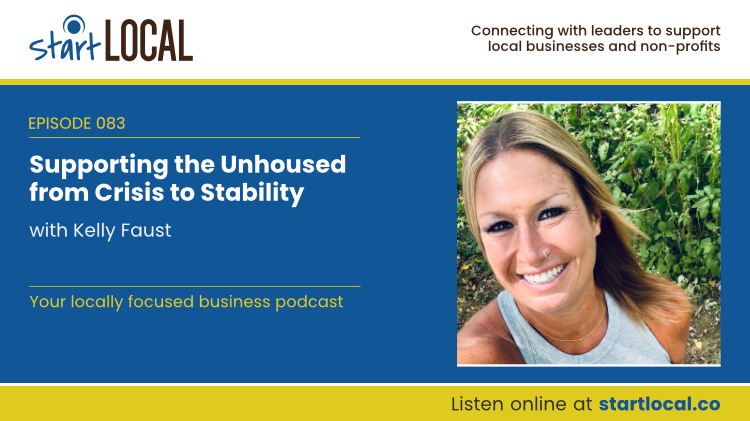
Homelessness and housing insecurity affect people in every community – including here in Chester County. We sit down with Kelly Faust, Community Engagement Coordinator at Good Samaritan Services, to learn how the organization supports individuals and families on their journey from crisis to stability. Kelly explains Good Sam’s personalized, relationship-based approach, its housing programs, and the wraparound services that include mentorship, counseling, and microloans. We also talk about the community partnerships that make their work possible – and the local events and fundraisers that make their work possible.
Links
Good Samaritan Services – Good Sam
- Website: goodsamservices.org
- LinkedIn: linkedin.com/company/good-samaritan-services
- Instagram: instagram.com/goodsamserv
- Facebook: facebook.com/GoodSamServ
- Kelly Faust on LinkedIn: linkedin.com/in/kelly-faust-477b9a2b3
Additional Organizations
- Anne’s Heart
- Phoenixville Women’s Outreach
- Phoenixville Free Clinic
- Union Community Care
- PA CareerLink
- Orion Communities
- Open Hearth, Inc.
- Citizen Advocacy of Chester County
- United Way of Chester County
- New Story Church
- Hopewell United Methodist Church
Intro: Welcome to Start Local, where we talk with business owners, leaders of nonprofits, and other members of our community focused on doing business in and around Chester County, Pennsylvania. Each episode will provide insight into the local business scene and tell you about opportunities to connect with and support businesses and nonprofits in your local area.
The Southern Chester County Chamber of Commerce promotes trade, commerce, industry, and sustainable economic development while supporting a diverse and growing marketplace. The Chamber is proud to partner with the Start Local podcast to raise the profile of businesses and nonprofits throughout Chester County. Learn more about the chamber at scccc. That’s scccc.com.
Liam Dempsey: Hey. Hey. Welcome to Start Local. I am Liam Dempsey, and I am delighted to be here once again, folks, with my good friend and trusty co-host Erik Goodmanson. Greetings, good friend. How are you today?
Erik Gudmundson: Greetings to you. I’m doing just fine, Liam. How are you doing today?
Liam Dempsey: Super awesome. Super awesome, good. Thank you. Thank you. Thank you.
Folks, today we are, as you can probably tell from my tone of voice here, we are super excited to welcome Kelly Faust to the show. Kelly’s a community engagement coordinator with Good Samaritan Services, or as us locals call it, Good Sam.
Kelly, welcome to the show. Glad you could be here.
Kelly Faust: I am so happy to be here. Hello. Hello.
Erik Gudmundson: We’re happy to have you as well because you were kind enough to give us a tour of Good Sam a while ago. And so now we actually get to talk in a little bit more depth about it and also share it a little bit with our listeners so they can have a taste too.
Kelly Faust: Fantastic.
Liam Dempsey: Good Samaritan Services, or as I said, Good Sam works to address homelessness in Chester and Lancaster counties. We certainly appreciate that Chester County has a notable homeless population in need of help. We’ve talked about that in other episodes for sure. Kelly, can you walk us briefly through how Good Sam works to address homelessness? I appreciate there’s a lot of different ways to go it. What’s Good Sam’s approach?
Kelly Faust: Sure, we really try hard to address people where they are. It’s not a one-size-fits-all program. So what we try to do is when someone comes to us, it ties into the fact that we’re 99% privately funded. We are not required to do certain things based on like government money that we receive. So, all of the things that we offer which are like short-term housing, we have housing across Lancaster and Chester county, and more than half of the people that we serve are actually never in our housing. It’s not an overnight shelter. It is a program. So we walk alongside people, basically from crisis to stability.
And we offer personalized case management with resource coordinators, and there are so many ways in which they meet with our resource coordinators on average 30 times when they’re with us.
And we offer in-house counseling. We have financial tools and wraparound services. Really. The personalized case management, though, is the heart of our program.
Erik Gudmundson: Thinking of the actual homes that Good Sam runs, how many people might be living in a Good Sam home at any one time?
Kelly Faust: Well, for the 300 people that we serve across both counties, we actually only have 130 beds in both counties. So there’s a few more in Chester County than there are in Lancaster County. But more than half of who we serve are actually in their own housing, and God willing, will never, never lose their home. So they come to us, and we can provide rental assistance, and they get personalized case management.
But we are in multiple towns across both counties where we can provide housing. We actually just had an open house in Coatesville, which is a new, it’s not a new property, but we’ve put a lot of improvements into it, and now we can offer housing for four women in Coatesville.
Liam Dempsey: Kelly, I was on the homepage of your website the other day, and I was noticing that there’s some stats there, and you just referenced that you serve about 300 people daily. And I was reading that you served 72,000 meals a year and you’ve given 461 microloans, including almost 3,000 hours of free therapy. And I’m not sure if Good Sam tracks it or not, but how do, I’m wondering if we can use these stats that I’m talking about as some kind of reference to get a scale of the homelessness issue locally here in Chester County. How many unhoused folks do we have locally?
Kelly Faust: So, Liam, there is something called the point-in-time count that they do every year in January. And in 2025, on January 29 2025, the count was 313 individuals. And that includes sheltered and unsheltered people. But for reference, the year before it, there were 213 individuals in 2024. And then the year before that, there were 436.
So, when you see such a big jump, this is a hard way to count and get a real picture. And when you see the number drop a lot from more than 200 people, it dropped from 23 to 24. There was some transitional housing that was closed in, I believe, in Chester County. And so that count just didn’t happen because a large segment of who’s homeless is invisible. It doesn’t count people on couches. It doesn’t count people living with relatives in cars. So it’s tough to use this as the full picture, for sure.
Erik Gudmundson: You mentioned that Good Sam has properties in Chester and Lancaster counties, and I would expect each property to provide a home for different communities or maybe different demographics. Where do you have homes, and what communities do each home serve?
Kelly Faust: So in Chester County, we have the most housing in Phoenixville, which is actually where Good Sam began back in 2001. We now have seven properties in Phoenixville. We also have the only single dad’s home in Chester County, where three families can live. The men who have custody of their children can live with their children. That can house three families.
We also just had a merger with Phoenixville Women’s Outreach. And so we have two homes that serve single women now in Phoenixville, and we also have four other properties that are for single men in Phoenixville. So Phoenixville has the most housing.
But Coatesville, where we have an office, like I said, we just had an open house for housing that will serve single women. And in Kennett Square, we have housing for men. And then Ephrata has housing for all the demographics, including families. And Lancaster has housing for women and housing for single moms. So, the goal over the next 10 years is to be able to serve all the demographics and all of the areas where we currently serve, rather than acquiring properties in new towns. We’re looking to be able to serve all the demographics in the towns we currently serve.
Liam Dempsey: Yeah, that’s an interesting plan. I look forward to seeing that come together. I want to talk to you about some of the wraparound services that you’ve talked about. Right. You know, folks know that you’re providing clean and safe and warm, or cool places for people to stay, depending on the weather. Depending on the weather. But tell me about those wraparound services. How else are you through Good Sam? How are you and your colleagues providing? I think you said homelessness to stability, I think that’s what you shared at the start of the conversation.
Kelly Faust: Sure. Well, for the last three years, we have had a trauma-informed clinical licensed therapist on staff who can see any and all of our participants, no matter what their age, at any of our properties. She’s been with us for three years. So that’s paramount, is that you have access to free, free therapy.
We also have a mentoring program, which is huge because, I mean, drawing on my own experience, the fact that mentors are volunteers, when people come to us, they are in crisis, they are not in their best form. And it’s easy. Just going back to my own experience of being able to disqualify people if you feel like they are required to care for you. So the fact that mentors are community members, in one case, we even had one of our board members who was mentoring a man. They are volunteering their time just to be a connection for somebody. And there’s really so much love that goes into that to just be a listening ear or a connection.
And when the resource coordinators ask our participants if they want to participate in the mentorship program, they can say that they want specific help with certain things. But our mentors aren’t there to be financial advisors; they aren’t there to be spiritual gurus. It’s not any kind of expertise-type service. It’s simply to be a connection. And our therapist will tell you that connection can actually re-establish neural pathways in the brain. So that’s a big one.
But we also offer financial literacy workshops. We have volunteers that come in and offer financial literacy classes. We, (excuse me). We also had a career coach come in and offer three workshops for one was resume writing, one was job search skills, and the other one was interview skills.
And we also offer microloans, which you mentioned, which basically is Good Sam co-signing a loan for people whose credit might be damaged or nonexistent. And we also have a matched savings program where anybody that saves up to $1,000, we will match it. And that really can help with a down payment on a house or an apartment.
But primarily, the personalized case management is our greatest asset. If they need something specific that it’s not a one-size-fits-all all program. So being able to you hear the I’ll do air quotes that no one can see, but the meet people where they’re at. Right. We truly are able to do that because when our resource coordinators meet with people, it’s like how specifically can we help you? What is it that you personally need, and how can we serve? That’s the blessing and the wraparound services that we offer is how can we walk alongside you until you’re stable.
Erik Gudmundson: You do a lot for the community, you provide all these services, and you do it as a nonprofit. It’s a tough time for nonprofit organizations everywhere, particularly with all the changes happening at the federal level. So, can you talk to us a little bit more about how Good Sam is funded? How do you get your money to operate and maintain all these assets in the community?
Kelly Faust: So great question, because this is important to again, what we’re able to provide. We’re 99% privately funded, which basically means that almost all of our financial support comes from individuals, businesses, churches, foundations and community organizations, not a large government contract or large public funding system.
That being said, we are absolutely affected by what’s going on out there right now because the other organizations and nonprofits that do, rely heavily on large government contracts that have lost them are now tapping the same donor base. So it’s tough. But we have a strong belief in our mission, and we are blessed with a community that has shown how much they care. And I mean, we’re literally powered by the community we serve. And I say that to say it’s a community problem and we are blessed, but we also have the responsibility to the community that funds us.
Erik Gudmundson: That indirect impact is significant, and I’m glad you mentioned it because I think not a lot of people understand that subtly how just because you don’t receive federal money doesn’t mean you’re not impacted. So that’s good for your donors to know and good for people considering donating to know.
Kelly Faust: Yeah.
Liam Dempsey: Let’s turn directly to those who might be in need of your services. How can those facing homelessness or experiencing being unhoused how can they access your support? What are the requirements to enter your support programs?
Kelly Faust: Well, there are a couple of ways that they can access our program. One that people are often unfamiliar with is in Chester County, where you can call 211, and that is a hotline for essential community services.
So, often I will get a text message from someone that I know, you know, just through the community that will say, hey, and ask me a question about like, can you help this person? Et cetera. And the best advice I can give is to go through either 211 or to call our 1800 number directly. And worth mentioning there, if you call our 1800 number, the first person that you would speak to and your point of contact is someone named Ashley, who works for us and has also graduated from our program. So 25% of our employees have actually been through Good Sam’s program. And it really is great for fostering empathy so that when somebody calls, it’s somebody that’s been where they’ve been. So, that’s one way to reach us is the 1800 number or through 211.
But also, you would need to be 18 to stay with us and be committed to actively being engaged in our program. So, although we do require that people be free of drugs and alcohol when they Stay with us. We are not focused on a sober living home. Like we don’t continue to test people, but our resource coordinators will connect people because again, the case managers, we choose to call them resource coordinators, instead of case managers, because they will connect people with the correct resources. So many times we’ve had certified recovery specialists come and meet with our participants. So basically you just need to be 18 and in need to reach out. And if our RCS can’t find housing that’s appropriate, they will connect you with people who might be appropriate for the need.
Erik Gudmundson: It’s interesting to know how clients could potentially find you, and I want to turn a little bit to talk about how donors might potentially find you. I see you, Kelly, at a lot of different chamber events, community events, things like that. You’re always there, you know, presenting the case for Good Sam to the community so that people know what it is and what you do. You’re in Phoenixville. I love the weird that Phoenixville embrace, and it’s just a fun place to be, and Good Sam gets in on that weird with some quirky and silly fundraisers. I want to hear about your bed races and your restaurant-focused fundraisers, if you could.
Kelly Faust: Okay, well, so embrace the weird. If that is not actually on the Phoenixville T-shirts or bumper stickers, it absolutely should be. And I say that because we are what, two weeks out, two weeks away from the Mrs. Roper romp. Like, if anyone doesn’t know what that is, that’s a sight to be seen. But yes, the Phoenixville Bed Races is one of our most fun fundraisers, and we partner with Anne’s Hart on that. And the thinking behind it is that the bed races is to draw attention that nobody should be without a bed in the upcoming winter season. And so it’s for a great cause.
And when I tell you that it’s every kind of weird and fabulous fun, if you don’t believe me, last year’s bed races are on YouTube so you can watch all two and a half hours of it from a drone. You name it, it has a very fabulous Mayor Pete as the emcee. It is all the fun things, and basically what it is is you can either build a bed and put it on wheels to the proper specs, or you can use one of the beds that we have, because last year was the first year that we had a church, a new story church; they built a fleet of beds. And thank you to Cubesmart, who gave Ann’s Heart a free storage facility to store the beds.
You will see on the first Saturday in November, beds being wheeled down to the street in front of Reeves Park, where there will be teams. Four people, one on each corner of the bed on wheels, and a person who must be at least 14 and weigh 75 pounds on the bed, wearing a helmet, racing down the street, turning around, and racing back. And somebody asked me the other day, Is it downhill, so you just race down the hill? It’s absolutely not downhill, and you have to turn around and run back. So it is a very terrible distance if you ask me, because it’s a shuttle run type dead sprint, and it’s more than 10ft. So for me, terrible. I will not be running, but I will be cheering everybody on.
And basically, each team it’s $25 a person to enter. And we ask that you try to raise money; there is an award for who raises the most money. There is an award for the most hilariously, fabulously, or punny dressed team. So people are in costumes. And basically it is. There’s usually at least three CrossFit teams. And so there’s that element of like, you know, like we are over here lunging before we run. And it is, it is all the things.
Last year, Good Sam won our first heat. So there’s that. But I will caution you that if you’re about winning, that means you have to keep running. So the teams that keep winning, they will run about six times. Six times generally in order to take home the gold.
Erik Gudmundson: That’s a lot of work.
Kelly Faust: It is a lot of work, and it is so much fun. I mean, there’s food trucks and face painting and balloon animals. It’s all the things, or like I say, just another day in Phoenixville. Anyone who lives there is like, yep, okay. So yeah, it’s great fun. And last year, it raised just over $40,000 for Anne’s heart and Good Samaritan services.
Erik Gudmundson: So that’s an incredible success. Plus, you’re building community. You’re getting a lot of people to find out about Good Sam and your mission in the process.
Kelly Faust: It’s fantastic. And the community really shows up, actually, for all the things. And yes, we have a Halloween howler coming up in Kennett Square, which is a 5k run or 1-mile walk with costumes and dogs and costumes. If you want to bring your dog, the dog may not run the 5k but the dog may walk the 1 mile. That is a whole lot of fun.
Last year, the Halloween howler was very, very cold. So that always adds to that, like, wow, we really did something this morning. Freezing cold run. And we also have our longest-running fundraiser, which is the very fabulous Taste of Phoenixville. That is, this will be our 24th year for that fundraiser. And last year it raised over $186,000.
Liam Dempsey: Wow.
Kelly Faust: So that is, yeah, that is. And I go to a lot of events. You guys are not wrong. And I have to say I absolutely love the taste. It’s a bit annoying, actually, that one of my favorite events is ours because I forgot to eat last year until it was like over. So yeah, very busy. Yeah.
But the Taste of Phoenixville is at Franklin Commons, and it’s the third Thursday in January every year. This year I think it’s the 15th, and it is 20. Last year, there were 23 local vendors, which are some of the greatest restaurants from Phoenixville. And they are all so incredible. They donate their time and the food, and it is all of their best bites. And there’s the best drinks, and it’s an open bar, and there are raffle baskets, and there’s a live appeal, and there’s dancing and there’s fun, and it is wild. So, yeah. Last year we sold 300 and I want to say 380 tickets. And even though there was an ice storm on that day, I believe 340 people actually checked in.
Liam Dempsey: That’s impressive.
Kelly Faust: It’s a whole lot of fun. And I can’t speak enough about the community of Phoenixville and how they rally around all the nonprofits and other nonprofit people that I know from the community. They all show up for our event, and it’s a blessing. So we love fun and weird. That’s why they hired me.
Liam Dempsey: Kell,y earlier this year, Phoenixville’s women’s outreach became a part of Good Sam. And you touched on that briefly at the start of our conversation. And what that means then is that Good Sam can now offer housing to women in Phoenixville. But can you talk a little bit about what the coming together of these two organizations both been around a while. What does that mean for those in need? How is the community going to be better served by this coming together?
Kelly Faust: Well, PWO, our CEO, Nate Hoffer, was actually part of helping Cheryl Messer, the founder of PWO, get Phoenixville Women’s Outreach started back about 10 years ago. So it’s really fantastic how it’s sort of all coming together like back full circle. PWO will now have access to the depth of our development team, and also, like our funding to back the houses. So we are a much larger. We’ve grown quite a bit through mergers over the last 20, 23 years. But basically, we’re going to continue serving women in those homes. But they have access to our personalized case management. So even though the merger was only officially official on, I think, July 29, our resource coordinators had been working with the women several months prior to that. So, yes.
Erik Gudmundson: And there is a bit of a stigma around being homeless. So I’d like you, Kelly, if you could, to spend a few moments dispelling some myths or untruths about homelessness, and include in that, if you would, tell us who can become homeless and why.
Kelly Faust: So, yeah, Erik, there’s all kinds of stigma and myths that aren’t true about homelessness. And in Chester County, primarily the lack of affordable housing. Like, sorry, I didn’t leave that for the great bump, bump, bum reveal. But that is the number one reason that people are experiencing homelessness is that there is a lack of affordable housing in Chester County. So there is new affordable housing being built. Not as quickly as other affordable housing is disappearing.
So some of the myths are that people are homeless because they’ve made bad choices. And it’s not that that doesn’t factor in. But most of the time, people fall into crisis from factors outside of their control, like job loss, divorce, medical debt, domestic violence, you know, any kind of emergency thing. And, you know, I mean, how many couches are between you and the street, right? If you don’t have a large family, you know, things can happen very quickly. You hear people talk about only being a few paychecks away. I know people that have a substantial income who aren’t that far away from some disastrous event that could create homelessness. It’s definitely a myth that everyone that’s homeless is addicted to drugs. That is part of the problem, but it’s absolutely not the root cause for most people.
Our participants also work. So usually when they come to us, they’re working one, if not two or more jobs, and they just can’t afford the housing. Some of the assistance that came about during COVID is gone. Landlords have raised rent because they can, and it’s tough. So people. It’s not that people don’t want to work. They are working.
Erik Gudmundson: That was one thing that Chris Cielo from the Chester County United Way highlighted when he was interviewed here on Start Local, specifically talking about the Alice population, where they might be one dead battery away from not being able to keep up with that debt and or might be able to be tossed out of their house because they can’t afford rent that month because, you know, rent or drive to work. But they are the, could be the homeless employed that’s fascinating in Chester County.
Kelly Faust: Well, yes, Chris. Yeah, Chris Cielo. He’s fantastic. And they, yes. Alice. Asset-limited.
Liam Dempsey: Income-constrained employed.
Kelly Faust: Income-constrained Employed. Thank you, Liam. Yeah. I mean, most everyone I know is Alice. So it’s definitely something where the stigma and what the myths are about homelessness. It’s also a myth that it only affects men. The fastest rising group of homeless people are women and children. So it’s not something that just affects men.
And one of my least favorite, because it’s ridiculous, is that people choose homelessness. Like, oh, they just want to stay out there. Nobody wants to be in danger or without somewhere to rest their head. Nobody chooses homelessness. So, you know, it doesn’t look the same everywhere. Excuse me. And like I said, primarily, it’s often hidden. So, you know, there’s so much that people are going through that we can’t see because they are on a couch somewhere, and that’s not included. So as far as the need actually being recognized, it’s all sort of unofficial as far as the magnitude of the need.
Liam Dempsey: Yeah. And the needs of those who are unhoused can be multifold. Right. You talked about the different services, and sometimes it’s chemical dependency, sometimes it’s, you know, they’re fleeing domestic violence, fleeing joblessness. They have responsibilities to children. We expect that Good Sam must partner with other local nonprofits to address the related needs of the communities that you serve. Can you walk us through a few of the organizations? Name a few of the organizations that you and your colleagues rely on to support the different communities where you work.
Kelly Faust: Yeah, absolutely. PACs for sure. And CACs for food. They give food for our people in emergency housing. The Phoenixville Free Clinic, Union Community Care. We actually all just went on a tour of the new facility in Coatesville. But Union Community Care is also one that is in Lancaster. And CareerLink, Orion, Ansheart, Open Hearth, so many churches and businesses that offer workshops and employment to our participants.
It’s a really tight community, I would say, and we all talk to each other often and have each other on speed dial as far as like, hey, this doesn’t work for this person here. Can it work for them there? And our resource coordinators are very dialed in to the other. nonprofits in the area and who needs to be referred where, et cetera. So they meet actually once a month to talk about who’s out there and how they can be served.
Erik Gudmundson: Kelly, I want to focus on you just a little bit personally and specifically your career. You’ve been with Good Sam for coming up on two years. And before that, you were at the Kubota tractor company for nine years. I remember when we first met, we were talking tractors for a while because we both have way too much experience with tractors, it seems to me recently you have more historically. And so why did you decide to transition from the corporate world to the nonprofit sector?
Kelly Faust: So there was a window of time in between those two things, Erik, where I was working for Kubota for over a decade, traveling for work, and it led to the deterioration of my marriage and a tough time that I’m so grateful that it all has landed me here, right when it’s like, why am I doing this? I firmly believe that it’s exactly where I’m supposed to be. And it would be an entire other episode for me to tell you the hilarious godwinks that have happened to land me here, because they are hilarious. They really are. But, you know, I, as somebody who is part of the recovery community, I’m going on eight and a half years of sobriety. I am blessed to understand that it took me burning my life down to be able to be a miracle, right? Like, to have received something miraculous, which is basically the love and support of a room full of people that had no dog in my race, showing me love and care, and segue back to me talking about the mentorship program, right? I didn’t know that I was disqualifying people who loved me, right? Like, you only love me because you’re my mom or whatever. And it wasn’t that I had lived a life where there was no love for me, but I absolutely was incapable of feeling it. So as I went through life achieving the AmErikan dream, right? Like, I was checking the things off the list. I was doing it. I was doing the things. I was angrier and angrier like, as I achieved things because I felt worse and worse because those things were the answer, supposedly, and they solved nothing.
So fast forward to burning my life down. And by the way, I am an open book. So, anyone that ever wants to know my full story, meet me for coffee. You can hear all about it. I would just tell you that landing here in this position, it’s wild that I get paid to just exist as me in this space because I literally, like, I’m living a miracle because I have an entirely different way of processing things and thinking about things.
And two weeks ago, I went into the water and got baptized. It’s been a really great journey. And the faith journey just began, like I said, about nine years ago. And also, I have a seven-year-old daughter, and I’m a single mom. So part of coming to work for the nonprofit was that this job gives me the flexibility to still drop Zoe off at school and pick her up. And she participates in volunteer groups and, you know, came with me last night to volunteer at the Affordable Housing for Veterans. So it’s a great experience for my child to learn the beauty of serving others. But most importantly, being here, I recognize that the worst possible feeling I ever had was actually me at the starting block. Right. For this new life that I love. So the people that come to us in crisis, I’m excited. Right. Like, I pray for people to get the right amount of pain all the time. So the fact that the people that we are privileged to serve are possibly at the beginning of their greatest life and their greatest journey, and to get to accompany them through it is absolutely a gift. So again, like the fact that I get a paycheck to walk alongside people who know that we care and believe in them. It’s absolutely true. And that’s the thing, Right? Who better to advocate for hope than people who have lived without it? Right. And we’re trying to build an army out here because you don’t know when you meet someone on their worst day that that could be the beginning of their best life. Right.
Liam Dempsey: Yeah.
Kelly Faust: So, I.
Liam Dempsey: Go ahead.
Kelly Faust: So I just, I, you know, people use the word enthusiastic oftentimes to describe me, and that would be accurate, I guess, if I were a dog, I’m the one that’s knocking stuff off the table with my very quickly wagging tail. I’ve met me, I’m familiar. But I, absolutely, again, it’s a blessing because we are believers that people can change and that miracles are real. I can speak for it.
Liam Dempsey: Thank you. Go ahead.
Erik Gudmundson: I would interject and just say that sounds like empathetic enthusiasm that, Kelly, you might want to include that in your mix. Empathetic enthusiasm, I think, would be a good catchphrase for you right there.
Kelly Faust: Kelly Cockshaw is going to hear that. And get me a shirt. That’s pretty good. I like that. Yeah, I like it. I like it.
Liam Dempsey: And you, Kelly, I’m moved by your share and your candidness there. Thank you very much for that.
Kelly Faust: Sure.
Liam Dempsey: You’re among the most active and really most engaged networking professionals we’ve ever had on our show. And we’ve had some folks who are very active in the networking community and are very good at it and are very genuine, and you are right there up there with them, if not even more so. And from we said from where we sit today, you do a fantastic job capturing the communities in which you engage on LinkedIn. You’re always posting fun photos, great photos, folks having what looks to be a good time together at this opening or that event, or the like is sharing photos and updates on LinkedIn. Is that really a valuable value to you? Does that bring value to Good Sam? Talk to us about that because we we’ve talked to people about the value of social media. What’s in it for you? What’s in it for Good Sam?
Kelly Faust: So funny you should ask that because I was not on social media whatsoever until this position ,and when my boss told me, okay, well you at least need to have a LinkedIn profile, that’s how that went. And I said, okay, what is that? Isn’t that that site where you just look for work? And she was like, ah, I don’t really know. I’m not that active on it. That’s what she said at the time. And I started out slowly. If you go back to like my first several posts, they’re hilarious. I don’t know what they are, but it’s funny, you should go look.
It has turned into such a valuable tool. I have, like, I can’t advocate strongly enough for the value of LinkedIn. It ranges from finding my actual, some of my favorite humans through there. Right. To being able to learn about people and then meet them in real life. There is nothing that excites me more than that. Like Trung Nguyen? Absolutely. Like when I first met Trung, we were like LinkedIn besties for months, commenting and just feeling the same kind of vibe. Ed Hanko and Lancaster. Like, I could name many people that are some of my favorite people. And before we actually started recording this episode, I was referencing someone I had never met who I thought of this morning on my way to my car based on a comment on a post.
But as far as knowing what other organizations are doing out in the community and sharing what I’m doing out in the community, I have had many people reach out to say, hey, can I come for a tour? Can I find out more about your organization? How can we partner? And so being able to engage for Backtrack to Community Engagement Coordinator, being able to network and connect on a daily basis with an audience that even I, with all the events that I go to, it’s a lot of ground and I will not forget walking in to the first time I walked in somewhere, and God bless her, Caitlin Pacheco, she was the one. She was like, You’re Kelly. I follow you on LinkedIn. And I was like, oh, Lord, I’m Taylor Swift. That was my moment. It was weird. Yeah, it was weird because I’m not used to people I don’t know knowing me.
But it’s become a real blessing to be able to share. Kind of like share my heart. Right. Because it’s very intertwined in Good Sam. I don’t know anyone that’s working for a nonprofit because they’re in love with the very high paycheck. Right. And I guess as marketing and things are more aligned with, like, storytelling and personal brand, if you will, I have just found there to be a lot of value and people being able to sort of get a sense for what I might offer or what they could offer to Good Sam.
You really can do a lot of piecing things together before you have to take the actual time to, like, meet for coffee and say, like, okay, this wasn’t a good fit. Like, there’s so many connections possible, I can assure you. I don’t think I’ve met 2,300 people. Oh, yeah, I probably have, actually. I go to a lot of things, but, yeah, 2,300, I think, is the amount of connections I have. And some of them are like, it’s wild that that’s how I know them. It’s from LinkedIn.
Erik Gudmundson: You make me think of another question that may be related. Maybe not. You can explain it to me. I’m thinking of where Good Sam’s footprint of service is across Lancaster and Chester counties. And my Math tells me that’s an area of over 1700 square miles. And you’re talking about 2,300 LinkedIn connections. Having such a dispersed workforce and cultural reach here locally, it has to make it difficult for any organization to maintain the culture that it wants. So how does Good Sam enable its people to create bonds, stay connected, and maintain its culture despite being spread so thin over such a large area and so many people in the area?
Kelly Faust: Well, Erik, very intentionally, we very intentionally make sure that A, we are showing each other the care and compassion that we show to our participants, because that’s a real thing. Compassion fatigue. We are very intentional and have Monday morning Zoom huddles where everybody is on a 45-minute, you know, just connecting with each other call. We’ve been going over our core values recently and basically, how everything we do is grounded in our Core values, which are, would you like me to tell you? I think that would make sense. Faith, compassion, partnership, stewardship, generosity, and gratitude. So for the last few huddles, we took one of the core values and discussed what it meant. And everybody has the opportunity to share.
But we also, besides just those huddles, we have all staff days that we are blessed to be able to use the very fancy, immensely large conference room at Hopewell United Methodist Church. And we meet there for an entire day. And I have to tell you that until you’ve experienced one of our staff cooked, picnic style, everybody brings their best thing, meals. I gotta tell you, Julie Morrow makes a pineapple upside-down cake that I’m scared when I see her coming. It’s frightening. It’s so good.
But yeah, we have the all staff days where we talk about things at all staff days. Like I think last time it was actually compassion fatigue. Right? And our therapist talked about ways you can combat that, ways you can identify it. Talked about burnout and what that means for us. But we also do little activities like we at Valentine’s day timing when we had an all staff day, we wrote little on tiny little like 3-inch cards, things like you rock, you know, like weird things, and put them in each other’s little bags. And I still have mine. They’re over on my desk. It’s funny how simple we are as human beings, right? Like just taking a step towards something that might make you feel better. It’s the taking the step that makes you feel better, not necessarily the thing, right? But I glance over at those little pink cards, they’re pink, all shades of pink. And I will glance over at them, and like I’ll rearrange them every now and then. So the one that’s on front is not just you rock, but yeah, somebody wrote wag, wag, wag on mine.
Erik Gudmundson: I’m not sure what that means, but.
Kelly Faust: My tail, my very waggy tail.
Erik Gudmundson: Ah, okay. There you go. Well, I appreciated something you said earlier in your answer about how sometimes you’ll dedicate meetings, if I understood correctly, to just discussing one of your values. Because I run across a lot of that may have their values listed out. Maybe the employees have memorized that list of values, maybe not. But even if they have, they may not fully understand what each of those values means. So taking the time to really talk through those values is just as important as identifying them in the first place. So that’s impressive on Good Sam right there.
Kelly Faust: It’s actually wild because we are assigning certain things to parts of the body. And it’s really funny to have Hannah, our chief program officer, ask on this company-wide Zoom call like, all right, where is gratitude again? Because we all look like, oh, where was it? Was it the head? Was it the heart? Was it the foot? Yeah, something. The last one we did was the knee. And I think that might have been gratitude, actually. But yes, I mean that’s. We have only one core value per 45-minute Zoom, and it could go on longer than that. And Shari Brabant, one of our people on the development team, will send out a follow-up email that expands upon it. So intentionality. Right. We also picked names out of a hat to meet together. I was paired with someone who’s on the Lancaster side of things, and it’s not someone that I knew a whole lot about other than just the general sense. And we’ve been building a relationship just based on things that again, and I’m not a believer. So, like, the ways in which our coming together have been able to add to each other’s lives is fantastic. But we also do really fun things like have all staff bowling and laser tag. And I’m trying to get people to do roller derby because I will put Nate Hoffer in a wall. He’s very competitive. He’ll let me do it.
Liam Dempsey: There is a roller derby team up near Phoenix. So, I bumped into them at Blobfest or Pride or one of those things.
Kelly Faust: I feel like I might be too old now, Liam. I don’t think I could take the landing, but at one point I considered it. So there.
Liam Dempsey: Yeah, no, it’s hardcore. I think I would watch and cheer.
Kelly, I want to ask you a question that I think you’ll have some real insight into, but it might be a hard question for you to answer. And that is can you name a local business or nonprofit that more folks should know about?
Kelly Faust: Citizen advocacy is the first one that comes to mind. But yes, I could go down an entirely long list. Citizen advocacy just came to mind because I just spoke with Christine Brown, who’s their executive director, earlier, and so that’s top of mind. But they actually pair like special needs adults with other community members.
And I mean, Anne’s Heart Orion, there’s so many nonprofits. Phoenixville in particular, has, I believe, more than 80 nonprofits. And yet to meet one that isn’t worthy. Like, I am excited to go to all these events because I have learned about things that are offered that I never knew about. You know, you touched on something earlier, like how do people come to stay with people at Good Sam. How do you, How do you find Good Sam? There’s a lot of help out there if you know about it. Right. And I referred someone to our single dad’s house that I know from recovery, who was staying in a sober living home, where he couldn’t have his children with him at a recovery house. So he was able to stay for the better part of, I want to say, seven or eight months with his three children in our single dad’s home.
And that was everything to him. Right. And when I was telling him about what we offer, he’s like, what’s the catch? I don’t understand, like, why? How can this be? And it’s wild to know how much the community is working incredibly hard to support all of our neighbors. Right. And you know, this job, right? Telling what we do and getting this out there, that was paramount in what you asked about on LinkedIn. Just getting people familiar with Good Samaritan. Are you guys, that church down across the street in Malvern? You know, Good Samaritan? We are either Good Samaritan Services or, like you said earlier, Good Sam.
And for people to know what we do, who we serve. Anytime I meet with somebody from another nonprofit, as you’ve alluded to, I am more than happy to announce the magnificent things that they do on my personal LinkedIn page because we’re all connected and we all support each other and the community members, and anything I can do for us, I will do for them. And, I mean, Liam, I watched you rappel off of a building this weekend, and what did I think about it? I thought, A, it was amazing, and B, I’m doing that next year. Except I don’t need the harness. I’m going. I’m just going on the rope. I’ll slide down the rope.
Erik Gudmundson: Kelly, is Good Sam hiring, and are you looking for volunteers?
Kelly Faust: As of this moment, I think we might be hiring for a resource coordinator, but you would have to check on that. I don’t know if that’s. If things happen quickly, and I’m remote most of the time. But for volunteers, we are always looking for another pair of hands. And it’s our volunteers that it’s not just the actual physical work that they do, but what it means to our participants to see community members showing up, to tend to their garden, to mow their lawn, to clean the house that is incredibly clean. Because we have house managers living in each of our homes that are people that are now employees of Good Sam. But they are people that have gone through our program, so they’re sensitive to what it’s like to be in our program.
But to have volunteers show up just to serve. Right. It’s powerful. So not only do they do amazing things, like basically all of the sweat equity that went into totally redoing everything except the kitchen in one of our men’s homes was from volunteer groups and our one facilities manager. So I mean, it’s amazing. There are some organizations that have specific teams that have actual skill sets that offered themselves to us for certain things that are beyond, you know, like electrical work or installing a floor, things like that. But volunteers, yeah, anybody looking to serve, we can always find something for you to do because it even things as small as one of my favorite things, which is looking at grown people’s faces when we ask if they could please color these welcome cards and the birthday cards. Because we give welcome baskets to everyone in our program, that involves like a blanket and a new set of sheets and some toiletry items and a welcome card with a hand colored component to it. So we can always use volunteers. And anybody that would like to volunteer can message me through LinkedIn, or can go Good Sam’s website and message me through there, or just yell out the window. Someone probably knows me.
Erik Gudmundson: Well, that’s perfect. And now people know how to reach you personally as well as professionally, and for all the information about Good Sam. So thank you for sharing all that, and thank you. This has been a great discussion. Kelly, I really appreciate your time today.
Kelly Faust: Absolutely. Thank you for having me.
Liam Dempsey: Thanks, Kelly. What a pleasure. Really appreciate all you shared with us and your kinder, and happy, energetic self as always. Thank you.
Kelly Faust: Thanks, Liam.
Erik Gudmundson: In addition to thanking our community engagement coordinator with Good Samaritan Services, I also must thank my co-host, Liam Dempsey. I’m Erik Gudmundson.
The Start Local podcast is published every two weeks. We invite you to subscribe to Start Local using your favorite podcast app or ask your smart speaker to play the Start Local podcast. You can visit the Start Local website at startlocal.co for show notes, including links mentioned on this show and summaries of past episodes.
We hope you join us for the next episode. Thank you for listening.