Podcast published: February 6, 2026
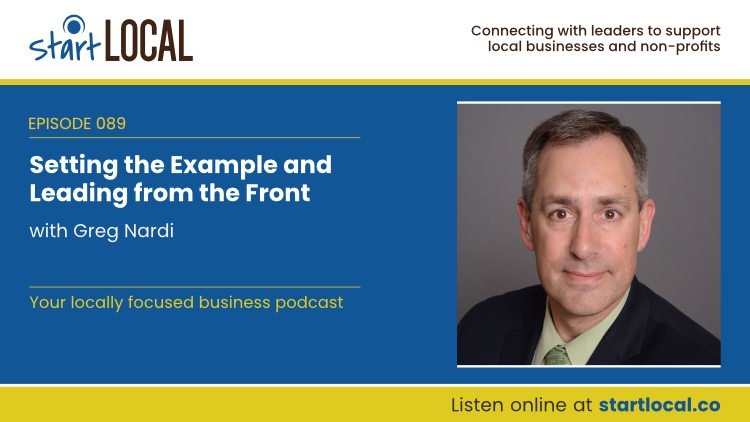
At a time when the country’s laws and legal systems are much debated, access to justice and a fair, effective legal system are as critical as ever. In this episode, we sit down with Greg Nardi, Executive Director of the Chester County Bar Association, to explore how the organization serves both its attorney members and the wider public. Greg walks us through the Bar Association’s dual role as a professional membership organization and a community resource, including pro bono legal services, civics education, and grant-making through the Chester County Bar Foundation. We discuss how fostering connection among attorneys leads to a more effective and humane legal system, how legal education supports access and equity, and why long-standing institutions like the Bar Association continue to matter in Chester County today.
Links
Chester County Bar Association
- Website: chescobar.org
- Facebook: facebook.com/chestercountybarassociation
- LinkedIn: linkedin.com/company/chester-county-bar-association
- Instagram: instagram.com/chestercountybar
Additional Links
- Pennsylvania Bar Association
- Legal Aid of Southeastern Pennsylvania
- Senior Law Center
- Crime Victims’ Center of Chester County
- Domestic Violence Center of Chester County
- Friends Association for Care and Protection of Children
- Westside Community Center
- Gateway HorseWorks
- Home of the Sparrow
- Housing Partnership of Chester County
- Wills for Heroes
- Chester County History Center
- Founding Forward
- FourBlock
Related Episodes
- Recording and Teaching Local, National, and Global History with Conor Hepp
- Connecting People that Can Help with People that Need Help with Chris Saello
Intro: Welcome to Start Local, where we talk with business owners, leaders of nonprofits, and other members of our community focused on doing business in and around Chester County, Pennsylvania. Each episode will provide insight into the local business scene and tell you about opportunities to connect with and support businesses and nonprofits in your local area.
The Southern Chester County Chamber of Commerce promotes trade, commerce, industry, and sustainable economic development while supporting a diverse and growing marketplace. The chamber is proud to partner with the Start Local podcast to raise the profile of businesses and nonprofits throughout Chester County. Learn more about the chamber at scccc.com. That’s scccc.com.
Liam Dempsey: Hey, hey, welcome to the Start Local Podcast. I’m Liam Dempsey. I’m here again today with my good friend, Erik Goodmanson. Erik, greetings and salutations. How are you?
Erik Gudmundson: Good day, Liam. I am doing well and excited to start 2026.
Liam Dempsey: Yeah, we are getting into the year, and it’s exciting so far.
Folks, today we are pleased to welcome Greg Nardi. Greg’s the Executive Director of the Chester County Bar Association. Based in our county seat, West Chester, the Chester County Bar Association is a membership organization for local attorneys, and as we shall very soon explore, it’s much, much more than that. Greg, welcome to the show.
Greg Nardi: Yeah, good afternoon, gentlemen. Thank you for having me.
Erik Gudmundson: Greg, it’s a pleasure to meet you, and I’m looking forward to learning a little bit more about what the Bar Association and you are all about.
Greg Nardi: Yeah, thank you, Erik.
Liam Dempsey: Greg, let’s set the stage really for our listeners. The Chester County Bar Association has, if I can put it this way, two overarching functions. One is to serve as a membership organization for attorneys in Chester County. But the second one that others— some folks might not be as familiar with is to help our local community understand, gain access to, and benefit from the legal system. So, if that’s correct, let’s start with the first item. Give us an overview of the Bar Association as an organization, as a membership organization.
Greg Nardi: Yeah, absolutely. You know, the Bar Association, like any membership association, exists to serve the needs of its members, and the members in a bar association, of course, are attorneys. So, we do everything from continuing legal education to bring groups of attorneys together in their various practice areas, their various committees that allow them to get together, whether they have a similar interest or a similar technical area that they want to build their, to network in and build their education on.
We also help build businesses and enable business of our members. So through networking events, professional networking events, we have a directory, legal services like a directory, a referral network. We have a career center on our website. We have deposition space that we rent out to members who might not have their own large office. We do things for law school students.
And then there’s communication within the legal community, announcements and updates from the various offices in the Justice Department, at the Center that need to get out to the members. We help enable that communication. Judges write opinions, and we help get those opinions out to the legal community. We do some legal publications for the members and for the community.
And then, of course, leadership opportunities. Whenever you have all these sections and committees, you need leaders to be those peer leaders within the group.
And then we also have volunteer opportunities like pro bono service. So, those pro bono legal services, we have a few programs within a bar association that we helped set up to enable that desire for a lot of our members.
Erik Gudmundson: That’s a long list of services there. And I want to also give you the opportunity to talk about the foundation side of the bar association. How does your organization work to enable folks who don’t know much about the legal system understand, gain access to, and benefit from the legal system?
Greg Nardi: Yeah. So the foundation allows the members who are in the association to do all of those things that help the community. So things like managing those pro bono services, right? The pro bono services, of course, are providing free legal services to members of the community who might not otherwise be able to afford it. So we’re managing that.
On the educational side, we manage the mock trial program for local high schools. We manage an essay contest for high school senior students that results in a scholarship for college. We have art contests for elementary, middle school, and high school students, along with a civics education topic.
You know, in May is Law Day. Law Day is around May 1st of each year, and we manage a program each around May 1st that celebrates the legal community, not only the lawyers, but all of the aspects of the legal community. And one of the examples of our Law Day celebration is bringing in a Justice Center or a County Employee of the Year to recognize those county employees who help our Justice Center work on a day-to-day basis, people who are known as going above and beyond what their standard call of duty might be on a day-to-day basis.
Liam Dempsey: So let’s dig a little bit deeper here. While the wider community might understand that the Chester County Bar Association is a single organization, it’s actually two legal entities. There’s a bar association, the membership side, which is a 501(c)(6) organization for membership, obviously.
And then there’s the Chester County Bar Foundation, which is a more traditional 501(c)(3). And Greg, as we were talking offline before we hit the record button, you were sharing that this is a pretty common configuration of a membership organization in a nonprofit. That’s not something unique to the Chester County Bar Association. But tell us a little bit how how this, this setup benefits both the attorneys and the local communities. I think we could probably extrapolate it from your previous two answers, but maybe you can tie it all together in a neat bow for us.
Greg Nardi: Yeah, it’s pretty common, especially in Pennsylvania. A lot of bar associations are 501(c)(6) membership associations. I think the (c)(6) designation allows a little more advocacy so that we’re allowed to do some lobbying within Harrisburg. We are able to advocate for the legal profession, for the independence of the judiciary, and the 501(c)(3) allows us to have some community-facing programs. And essentially, by having a 501(c)(3) that’s able to raise money a little bit better than a 501(c)(6) can do, essentially, it allows us to raise the money that allows us to do more and better in the community, so that all of those community-facing things are enabled through this foundation. You know, our foundation just celebrated its 40th anniversary last year.
And when I’ve heard recent stories about a few attorneys that are still in practice today, they had this vision years ago to just try to do good in the community, that they wanted to do good in the community, and started this 501(c)(3). And now to see that they not only are able to raise some money that helps fund some of the public-facing programs within the Bar Association, they’ve also started a grant program so that those other community nonprofits that have direct legal services that contribute to access to justice, that help reduce recidivism.
They’ve now— the Bar Foundation here in Chester County has a history of— now we’ve given just over $1.5 million over the past 11 years. Pretty amazing when you think about just a vision just a few years ago.
Erik Gudmundson: That’s an impressive number. And that makes sense that that came from the foundation side.
I want to go back to the association side because in a previous conversation, you shared that the Chester County Bar Association is committed to supporting its members to become better attorneys. And we understood, you know, some of the ways that you do that from the very first answer you gave here on the podcast today. And as you’re helping members become better attorneys, you’re working to make a better legal system here in the county and beyond. Tell us what you mean by that.
Greg Nardi: Yeah, I think the better attorney is through the education, through the networking. The networking, you know, as I’ve watched bar associations over the past 8 years, one thing I’ve noticed that the networking, you know, I call it in every event, has like an onion of networking going on. Some attorneys are there for personal reasons. Some are there for professional reasons. Younger attorneys want to meet older and more experienced attorneys. The friends who have developed friendships over many years just want to see each other and hang out. Some people might be there to run into someone and gain some insight about a case they might have together. Of course, attorneys and judges want to network with each other, and overall, what it does is just create a more civil atmosphere amongst the attorneys where the practice of law that can be pretty stressful on a day-to-day basis can be just a little bit better, a little more civil.
Erik Gudmundson: I imagine that the discourse that your organization permits and facilitates, it probably helps to make the legal system a little bit more efficient for both sides. And therefore everybody benefits from it because hopefully their legal bills might be a little bit less. So, how does that work with the coopetition, I guess I’d call it, like, is there? How do I want to ask this? This is going to be my beginning of edits, Liam, but…
Greg Nardi: Yeah, I love your term co-opetition, right? I’ve coined that amongst bar associations as well. And one thing I’ve seen with attorneys is that they are not hurting for business right now. Almost all the attorneys I run into are busier than they can handle. So they are happy to refer cases to each other, and the networking at the bar association allows them to do that. Even within the same practice area, between practice areas, they are able to refer cases to each other. When they have good relationships with one another, they are able to ask each other for advice. When they are on opposite sides of the courtroom, they are able to work together for better outcomes for their clients, because it does settle cases faster than having to go through a full legal process where every single— where every single fact is argued over. They can come to agreements faster.
So them them, all of the attorneys working together better, knowing each other through organizations like the Bar Association, does lead to better outcomes for clients, and it leads to a faster outcome for the clients, which then leads to a better justice system overall.
Liam Dempsey: Well, doing research for this conversation, Greg, I was reading in New Matter, your Bar Association’s magazine, that the association was focused on Fostering community and connection within the organization is the theme for 2025. And you’ve just spent several minutes talking about the value of networking and the different ways that it’s happening. But as a theme, how did you go about weaving that in? Because, right, it’s not just having some drinks and some food at a nice location or coming together for a relevant CLE and then maybe a drink or a lunch afterwards. What kind of intentionality did you bring to your efforts to foster that community beyond menu considerations?
Greg Nardi: Yep, so fostering community. In 2025, we had a president, James Doyle, out of Gotham Greenwood. He was the youngest president in history, and he just wanted to continue and reinforce some of those things that we were doing, from in-person networking events, assisting with the communication from the judges to the courthouse, assisting, getting that information out, and with community that we have all these community-facing programs. It’s not just the connection within the legal community, but it’s the connection outside of the legal community, you know, the connection between the Bar Association and other nonprofits, the nonprofits that benefit from our grant program, and benefits within the community such as our Lawyer Referral and Information Service, making sure that we’re able to help the community when they, when they have a legal need and to make sure they’re informed of other possible free outlets for what they’re doing before they potentially spend a lot of money on an attorney.
Erik Gudmundson: And I wanted to get into that as well, because there are people in Chester County who need legal services and cannot afford them. I know it’s a shocker since Chester County is supposedly the wealthiest county all around and all that, but there is an unmet need. Legal Aid of Southeastern PA and the Senior Law Center are two organizations that come to mind, providing free legal services. More interestingly though, to me, on top of that, the Chester County Bar Association provides free legal services for the working poor. That is to say, the ALICE community. And we’ve talked about them on many episodes of this show because it’s such a fascinating dynamic. But the ALICE community might not qualify for legal aid services, but they can access them through the Bar Association’s Access to Justice program. So tell us about that program.
Greg Nardi: Yeah, it’s a great program that we have. We have this great partnership with Legal Aid of Southeastern Pennsylvania and Rachel Hausman, who’s the managing attorney for the Chester County office here in West Chester, where, through their intake process, they, of course are trying to financially qualify any potential client for legal aid. And if they are just above the legal aid threshold, based on their requirements, they can then refer them over to our Access to Justice program, which is our pro bono. So for the similar types of civil legal aid cases that the Legal Aid of Southeastern Pennsylvania office would help with, we then have attorneys within the Bar Association that agree to take on some of these cases to try to help that, that community out. You know, in addition to working with Legal Aid, we have other pro bono programs. We have with the Housing Partnership of Chester County, we have a will program for those first-time home buyers. We also operate Wills for Heroes, which is a Pennsylvania statewide program out of the Pennsylvania Bar Association. And we host clinics a couple of times a year where we do free wills and other estate documents for first responders and veterans within the community.
Liam Dempsey: So the Chester County Bar Association has a very long history. And in fact, when we had Connor Hepp, who is the Executive Director of the West Chester County History Center, he was talking about some of the legal history of wider, wider Chester County and not the Bar Association. But I recommend listeners go check out that episode. He talked about the Battle of West Chester. We’ll be sure to link to that in our show notes.
But, but Greg, I to— I want was reading on your website that the Bar Association was formed sometime in the latter half of the 1800s, which is a really long time for a membership organization. Can you touch on just a few of the highlights or some of the history of the organization? You know, I feel like we could have a whole podcast on it, but maybe just a few bullet points to share.
Greg Nardi: Yeah, I think what’s neat about bar associations is you can really trace a history of any bar association out to the establishment of the first court in any county. That essentially, once there was more than 2 attorneys in any county, they would get together on some basis. And while the term bar association might not have existed at the time, the history of the bar association goes all the way back to the forming of the first court. So it’s neat when you see, when you see CHESCO 250 events, the AmErika 250 events going on. And you see that the history of, you know, Chester County as one of the first counties in the Commonwealth. Well, as soon as that county was established, of course, that meant that a legal system had to be established, and something resembling the Bar Association had to exist. So whether they called themselves the Bar Association or before that, a law library, or some other terms, you know, just need to see that the history of an organization like this stretches all the way back.
Erik Gudmundson: You mentioned earlier about continuing legal education services that you help provide. And I think a lot of people may not know that attorneys are required to enroll in continuing legal education to maintain their law licenses. Tell us a little bit more about those educational programs, including how you go about educating the next generation of lawyers, and moot court competitions or mock trials?
Liam Dempsey: Yeah.
Greg Nardi: Yeah, the continuing education for attorneys is just a series of classes. They have to do 12 hours per year. Some are in ethical areas, some are in substantive areas. Of course, attorneys want to focus on the areas in which they practice.
So, we have 25 different practice area sections, and those sections help find volunteers, find volunteers, those peer leaders, those peers, the more experienced peers who have unique perspectives or unique experience, and then they help teach others. It’s a great relationship we have with our bench. So, of course, the judges in our county participate in many of these programs and help pass on lessons learned and advice to all the attorneys in the county. Yeah.
And maybe a little more exciting is how this bar association is prepping that next generation, right? So we have partnered programs with West Chester University here in town where we have partnered. They have a pre-law, pre-law school program within the undergraduate program. And we have helped them with some of their programs, always available with guest speakers. They have a career day where many of our lawyers, especially the alumni of West Chester University, help out.
Many of our attorneys are coaches for the mock trial competition. We talked about, you know, how our Young Lawyer Division runs that mock trial program. So whether it’s guest speakers for high schoolers, or a program at West Chester University or the law school programs. Yeah, pretty, pretty exciting to watch, know, each you generation, know, help out that next one.
Liam Dempsey: I want to go back and talk about the Bar Foundation. And you shared previously that the foundation awarded about $150,000 in grants to local nonprofits in 2025. And earlier in this conversation, you shared that over the life of the foundation, it was something like $1.5 million, if my memory and notes serve me correctly, which are, you know, both $150,000 and $1.5 million are significant amounts of money to be giving away. And as you shared, those grants are really about furthering the foundation’s missions to help folks understand the legal system, get access to it, and really benefit from it. But tell us about, about the nature of the programs that the foundation supports. What organizations has the Bar Association funded? And I guess kind of why, and not a why in the sense of this specific organization, but what kind of organizations does the foundation fund?
Greg Nardi: Yeah, when the foundation was first able to give those first few dollars away, they focused on those organizations that do direct legal services. And we’ve mentioned a few of them already. Legal Aid of Southeastern Pennsylvania, The Crime Victim Center, the Domestic Violence Center, the Senior Law Center, Friends Association that has the Epic Homelessness Prevention Program, right? Those are organizations that you see attorneys within within their staff that are providing legal services in some way to their clients.
And then as the foundation grew in capability, it was able to expand and look at programs like the Westside Community Center. Westside Community Center has an immigration legal services program where some of their staff have been trained by the Department of Justice to assist immigrants in the proper preparation and processing of the paperwork, right? A very complicated process that I know very little about, other than it’s very complicated. And so to know that, right, there’s somebody right down the road who’s helping out that population in our county, it’s— I believe it’s the only program like it that is here in the county.
And so then you have programs like Gateway Horse Works that have programs with the prison that help, as certain populations are preparing to be released from prison, they are ensuring the mental health of those clients and then helping reduce recidivism.
You have programs like Home of the Sparrow that are helping women as they come out of prison, make sure they launch correctly and lead successful lives, again, reducing recidivism. And so those are the types of programs that our foundation board is looking at when they decide where to give money out. Probably the hardest part is that they wish they had more money. There’s so many programs, and we’re just not able to fill the great need out there.
Erik Gudmundson: Let’s turn the magnifying glass around a little bit and talk about your own funding. You mentioned two organizations, technically, the Chester County Bar Association and the Chester County Bar Foundation. What are the funding sources for those two organizations primarily?
Greg Nardi: Within the association, we have funding streams starting with dues revenue. Of course, our members pay dues, so that brings in some of our income. We have some non-dues revenues, such as marketing opportunities and networking opportunities that we provide with partner businesses that want to do business with attorneys and help attorneys build business, as well as allow attorneys to do business with them for the services that they need.
For the foundation, we have normal fundraising. We do fundraisers each year. Every spring, we run an event we call our Key Gala, which is the only big fundraising event that we do, you know specifically for the 501(c)(3) that helps feed that grant program that we’ve been talking about.
Liam Dempsey: Last year, the Pennsylvania Bar Association and its Conference of County Bar Leaders gave an award to your bar association for its Law Day program. You mentioned the program earlier in this conversation, but tell us a little bit more about that. And can you touch on what sets it apart for recognition from your colleagues across the Commonwealth of Pennsylvania? What’s so special about it that everybody from all over the state said we should recognize?
Greg Nardi: Yeah, well, first, the Pennsylvania Bar Association has a great program that recognizes a lot of great programs across all counties. So that’s, it’s pretty special to be recognized by them. And it’s neat to see all of the programs that other counties get recognized for.
Last year, we looked at our Law Day program. I’m not sure, I think a lot of counties do some great Law Day programs. I think what I like about our Law Day program is that it tries to look at the entire legal community. We try to recognize the legal community, everything from those elementary school kids that participated in the art contest to the high school essay contest winners and their great thoughts on some civics topic, to an induction ceremony where we ceremonially induct new lawyers into the court of Common Pleas for Chester County.
And then we recognize employees of the justice system of our county, great employees of our county. We recognize other community members who do community service, but community service that helps the justice system. And then we also recognize our own members that are doing great things in the community, you know, through their own community service. So it’s not just a focus on our members, but a focus on the entire legal community.
And to see our judges participate in it, you know, for the past many years, the president judge, President Judge Hall a few years ago, to now President Judge Wheatcraft, have supported this ceremony and hosted that ceremony in their courtroom. And that sends a message to the county, it sends a message to the community, sends a message to the bar that they think that type of thing is very important.
Erik Gudmundson: Well, as I drive around, and walk around the boroughs here in the county, I see lots of signs for different attorneys, uh, you know, group offices, individual offices. So I want to talk about numbers for a moment. Um, how many, uh, people— how many members, I should say— do you have within your organization? And do you have an understanding of how many practicing attorneys and licensed attorneys, uh, there are here in Chester County?
Greg Nardi: Yeah, within our membership, we have just over 1,000 members. I think there’s somewhere just over 2,000 attorneys in Chester County. Not all of them. I would love all of them to be members of the Bar Association. I think it would benefit them. But some of them might work in other counties. They might work in Philadelphia, New York City, where they commute, and maybe it wouldn’t make sense for them to be in the Chester County Bar Association. But of course, you know, as we’ve seen our membership grow, one thing I’ve noticed is that members bring in members, and that often there are even attorneys aren’t don’t know of all the services and all the benefits that can come directly or indirectly through membership in a bar association. And often it’s over a cup of coffee where a member is having a cup of coffee with a non-member and says, “Hey, you’re missing out. You need to come join. And they check it out.
Erik Gudmundson: Leadership in any membership organization is tough ’cause you have to keep all the members rowing in generally the same direction. And I imagine trying to keep 1,000 attorneys all rowing in the same direction would be a unique set of challenges. So how do you work through that?
Greg Nardi: Yeah, I think it’s the great volunteer leaders we have. I mentioned the board of directors, right? It starts with a great board of directors who’s helping provide that guidance and direction on a month-to-month, day-to-day basis. It’s a great relationship between myself and my staff and that board and the president on a year-to-year basis.
And then it’s those, again, almost 50 different committees and sections. We have some incredibly dedicated volunteer leaders. We have a few sections that meet every single month, that those volunteer leaders are finding something to talk about that’s relevant to a practice area, and they get good turnouts for the meeting, right? There’s no place to show your worth when it’s a volunteer organization; people vote with their feet. And to see a great turnout for many of these sections and committees month after month, you can just see that comes from those great, dedicated volunteers.
Liam Dempsey: I want to spend some time talking about your career here, Greg. A perusal of LinkedIn makes it clear that you spent a number of years in leadership positions with the United States Army across a variety of roles and, dare I say, locations. Again, we could probably have a whole podcast episode on your military experience, but let’s narrow it down to just a single question. What are 3 key leadership insights or lessons that you can share with your that you can share from your career with the Army?
Greg Nardi: Yeah, that’s a good question. One of the first things that comes to mind when you ask that is about setting the example. It’s something that I learned early as a freshman in college, when I was being taught and mentored by those sophomores, juniors, and seniors, was just the importance of setting the example from your timeliness in the morning to just— And tied to that is attitude and work ethic, right? Having that positive can-do mindset, not necessarily Pollyanna positivity, but just a positivity that we can accomplish the mission, that we will accomplish the mission. And that, in that, it’s back to setting the example. You don’t necessarily have to be the smartest person in the room. And I am definitely not. I have an incredible staff, and I am never the smartest person in the room when I come to work. I’m never the smartest person in the room when I sit with my board of directors.
But what that does is it sort of provides a motivation to set the example in terms of constantly learning, constantly striving to achieve a higher standard, to meet the higher standard around me. And then tied to that is lifelong learning. Just having that hunger, that desire to learn something new, whether it’s about a new organization in the community I didn’t know about, to learn about the legal profession, to learn about nonprofits, profit management. And, you know, those things are what make great leaders in whether it’s in the Army or another military branch. And I think it has served people well outside of the military as well.
Erik Gudmundson: Sticking with your resume for another question, you’ve been leading our local bar association for about 3 years. And prior to that, you led the Bucks County Bar Association for 4 years. Clearly, you enjoy the job. Why do you, what do you enjoy about leading membership organizations for attorneys?
Greg Nardi: Yeah, similar to my time in the Army, it was about the people, right? When people ask me what do I miss most about leaving the Army, it was the people. You’re around so many great people.
In the Bucks County Bar, I love the staff I worked with. I love the attorneys there. I love seeing what they did on a day-to-day, week-to-week basis. So many of the good things that have continued here and into Chester County. We have an incredible group of leaders that I mentioned. I have an incredible staff I get to work with and just love working with the people, and, you know, the partner organizations outside of this, know, you from the Chambers of Commerce to the nonprofits we’ve talked about that are doing services to— and then just meeting the local business owners here in West Chester, right? Just a great group of people, people that are, you know, leading great organizations and businesses, just trying to make things happen.
Liam Dempsey: Let’s get out of the office and leave the computer and the laptop behind. You’re into your outdoors, Greg. You like some hiking, you like some camping and the like. Tell us about some of your local favorite places to hike. Where in and around Chester County do you like to go hiking?
Greg Nardi: Oh gosh, I don’t know that I’m the spokesperson for hiking as much as I like to try, I think maybe I try more than I do. I’d say locally, Valley Forge, of course, has great trails. You can get a good number of miles in and see a lot of different things for a veteran and probably for any AmErikan, it’s just an inspirational place.
I think a hidden gem that a lot of people don’t know about is Founding Forward. Founding Forward is a campus just west of Valley Forge Park. Just west of the, into Chester County on Route 23.
Again, they’re a civic organization. They are now part of the civics arm of the Union League. And on the backside of their campus is, I think, about 50 acres. It’s called the Medal of Honor Grove, and it’s an incredible network of trails with monuments and markers to every Medal of Honor recipient that has ever occurred, along with some other honors, other placards. It’s just it’s a beautiful space that you can walk around, you can reflect, it’s quiet.
And then if I had to pick a hiking location a little further away, it’s just the Appalachian Trail. I’ve only hiked small portions of it, but the fact that we live near so much of the Appalachian Trail as it you goes, know, from the north-south portion coming into Pennsylvania to the east-west portion moving towards New Jersey and New York, is pretty awesome when you want a bigger challenge and some incredible views.
Erik Gudmundson: Those are some great tips. And that’s one of the reasons I really enjoy these podcasts, ’cause everybody brings something unique and talks about lifelong learning. I have episode-long learning, I feel like, when we do these interviews.
At a recent networking event, we heard you speak eloquently and passionately about how the Scouts are helping neurodivergent teens grow and flourish as Scouts. Tell us about that.
Greg Nardi: Yeah, so I’ve participated in Boy Scouts growing up. My sons participated in the Scouts BSA program through Troop 7 in Malvern. And in my time with Troop 7 in Malvern, there was a brother organization, Troop 77, which was a troop for boys with autism and other disabilities. And at the time, my sons were going through Troop 7, they had some peers and I met some other dads who had sons both in Troop 77 and Troop 7. So as my sons left the scouting program and went off to college, I knew I wanted to continue serving with Scouts. So I continue to serve with Troop 7 in some capacities.
But the Troop 77 dads really have to run that program. And I could see that they could use extra hands. So I plugged in there, got to know the Scoutmaster real well .I’m a West Point graduate, he’s a Naval Academy graduate, so we naturally bonded over loving and hating each other at the same time. And a friendship was struck from there, and now I’ve gotten even more involved with the Troop 77 leadership.
Liam Dempsey: Back to your career. You’ve worked for the government, in the military, and in the Army. You’ve worked in the private sector, and now you’re in the nonprofit sector. You’ve, by all outward glances, appear to have successfully transitioned your career from the military to civilian life, as the phrase goes. And certainly we can read enough articles about the challenges of making that transition. I’ve never served in the military, so I don’t have any firsthand experience of that. But I saw on LinkedIn that you served as a career readiness instructor for an organization called Four Blocks, and that’s a nonprofit helping veterans and their spouses transition careers, really from the military to the private sector. Greg, tell us a little bit about the challenges that veterans might face when transitioning to the civilian job sector. What’s that like for veterans?
Greg Nardi: Yeah, I think one of the biggest challenges that many veterans face, and I know I faced, is the loss of purpose and the loss of community, right? That you’re part of this incredible organization that has this very high-level mission to take care of the country, to fight, potentially fight for freedom if needed. And then that changes, and that ends very quickly. And so to redefine that is a huge challenge.
And then tied to that, of course, is you gotta find that next purpose. You gotta find that next career. And the purpose can be tied to a nonprofit and a volunteer, but you do have to pay the bills and you have to try to find purpose in some sort of job. And so finding a new career and potentially finding a new place is very difficult. And that’s— there are great organizations. FourBlock is definitely an awesome organization doing great things. So that organization helped me, and I did a lot of things okay getting out, and I did a lot of stupid mistakes as I transitioned out. And I wanted to help pass on some of those lessons learned.
And even with all that assistance, it’s still hard hard, right? Nothing is guaranteed, and job markets are tough, and there’s tough competition, you know. So even those coming out of the military with great resumes, they are still competing against other people, maybe who aren’t out of the military, who also have great resumes.
Erik Gudmundson: I always love learning from other people’s mistakes. I find that much more, you know, instructive than learning from other people’s successes. So I fully understand and appreciate what you’re saying there, Greg.
Liam Dempsey: And it’s less painful than learning from our own mistakes.
Erik Gudmundson: Although they’re good too. They’re good too. I have to ask a perennial question that’s always a loved and hated question both. You just told us about a nonprofit that more folks should know about, but let me ask you about a local business or another local nonprofit, perhaps, that more people should know about.
Greg Nardi: Let me go with the Westside Community Center. The Westside Community Center is doing incredible things for youth in our, from their before and after school activities, their weekend activities, and their summer camps. And then of course, I got to know them initially through their grant application and their immigration legal services. Just, you know, an organization that it feels like to me they’re punching way above their weight. The number of community members they serve, the amount of meals they serve, the amount of services they’re providing for the community, just awesome.
Liam Dempsey: Well, we’ll be sure to link to them and all the other organizations and businesses and items that we’ve talked about over in the show notes on our website on startlocal.co. That’s startlocal.co.
Greg, is the Bar Association hiring? And if so, where can folks learn about what positions might be available?
Greg Nardi: Well, so right now we have a small staff. There’s only 6 of us. We are not hiring. But, for the attorneys in the community, we do have a career center. So, for the attorneys in the community that might be looking, check out our website, chescobar.org, and see what might be available for you.
Erik Gudmundson: How can the community support the Chester County Bar Association and Chester County Bar Foundation? Feel welcome to plug your next fundraising event you have coming up.
Greg Nardi: Yeah, I think for, you know, it’s just becoming familiar with our services for the community. We want the community to use our services, that when our services are used, right, then we know that we you have, know, increasing value in the community.
Help us get the word out about our civics and legal education programs. You know, we have guest speakers that will go into schools to provide lessons that we’ve developed in partnership with the CCIU. And, you know, provide those, you know, opportunities, whether it’s those classes, the art contest, the essay contest, just getting the word out about that.
And of course, if anybody knows about a nonprofit that’s in the access to justice space, that’s helping legal education, that’s helping provide legal services, you know, please, please send them, send them our way so that we can get them tied in with our grant program.
Erik Gudmundson: Greg Nardi, Executive Director of the Chester County Bar Association. Where can listeners connect with you if they have someone to send you? Where can they join the Bar Association? Where can they take advantage of the Bar Association legal assistance programs, and how to find out about them?
Greg Nardi: Yeah, all of that, our contact information, joining information, services for the community, chescobar.org, chescobar.org.
Liam Dempsey: Greg, thanks for joining us here today. Really enjoyed our time. Thanks for walking us through so much of what the Bar Association and the Foundation does, and I’m looking forward to hitting a few new hiking spots.
Greg Nardi: Thank you, gentlemen. This was great.
Erik Gudmundson: Yeah, thank you, Greg. Really appreciate your time today. And thank you also to my co-host, Liam Dempsey. I’m Erik Gudmundson.
The StartLocal podcast is published every 2 weeks. We invite you to subscribe to StartLocal using your favorite podcast app or ask your smart speaker to play the Start Local podcast. You can visit the StartLocal website at startlocal.co for show notes, including links mentioned on this show and summaries of past episodes.
We hope you join us for the next episode. Thank you for listening.